
A wobbly office chair is usually caused by one of four things: loose or worn caster wheels, a cracked or damaged base, a worn gas lift connection, or loose bolts where the seat attaches to the mechanism and base. The good news is that most of these problems are easy to diagnose and fix with basic tools and a few affordable replacement parts.
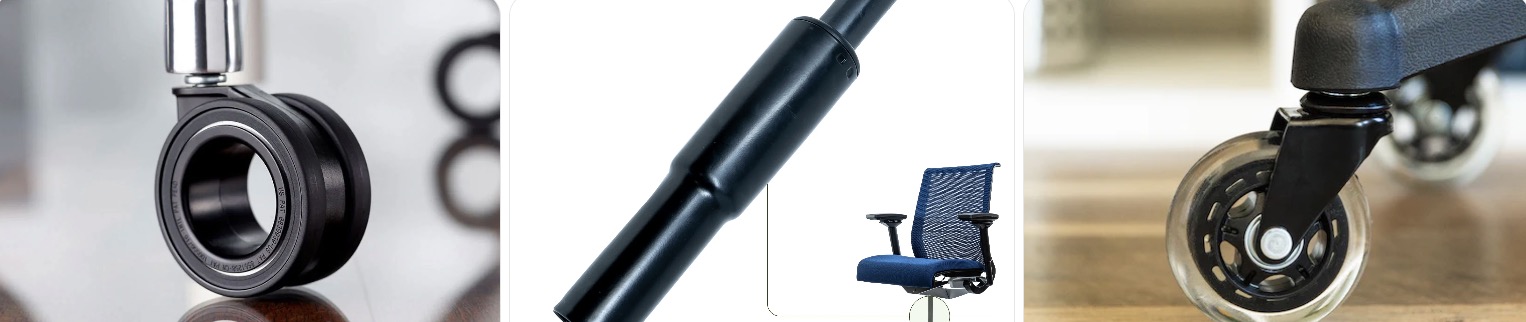
Common Signs of a Loose Chair Base
- The chair rocks side to side even on a flat floor.
- You feel play or movement where the base meets the gas lift.
- One or more wheels feel loose, bent, or scrape the floor.
- You hear creaking or clicking when you shift your weight.
- The chair leans slightly to one side when you sit down.
Safety First
Before you start, clear a workspace and always flip the chair gently onto its side or back. If you see any deep cracks in the base or bent metal parts, avoid using the chair until you repair or replace those components. A failing base can suddenly collapse and cause injury.
Tools and Parts You May Need
You do not need anything fancy, but having the right tools and parts ready will make the repair quicker and safer.
- Set of screwdrivers and hex keys (Allen keys). A simple hex key set usually covers most office chairs.
- Adjustable wrench or socket set.
- Rubber mallet or regular hammer wrapped in a cloth.
- Penetrating oil (for stuck parts).
- Optional: medium-strength thread locker, such as a blue thread-locking compound.
- Replacement parts as needed:
- replacement office chair wheels (casters)
- replacement five-star base
- replacement gas lift cylinder
- Complete office chair repair kit (includes common parts)

Omyoffice Office Chair Cylinder Replacement,Heavy-Duty Highest End Class 4 Hydraulic Pneumatic Piston, Universal Size Fits Most Chairs

Besitu 500Lbs Office Chair Replacement Parts, w/ 6'' x 10.2" Mounting Holes Chair Base Heavy Duty Plate Swivel Tilt Control Seat Mechanism for Executive and Gaming Chairs

Omyoffice 5.5 inch Office Chair Gas Lift Cylinder-Office Chair Replacement Parts,Universal Size Fits Most Chairs,Heavy Duty Gas Lift Hydraulic/Pneumatic Piston(Black)
Step 1: Flip the Chair and Find Where the Wobble Starts
Gently lay the chair on its side so you can see the base, wheels, gas lift, and the underside of the seat. With one hand holding the seat, use the other hand to move different parts and feel for play or looseness.
- Check the caster wheels: Grab each wheel and wiggle it. If one moves more than the others, feels loose, or falls out easily, that wheel or its stem is likely worn.
- Check the base spokes: Look closely at the center hub and where each leg (spoke) meets the hub. Hairline cracks or stress marks can cause wobble.
- Check the gas lift connection: Try moving the gas cylinder where it enters the base. Any noticeable side-to-side play indicates wear in the socket or the cylinder itself.
- Check the seat plate and mechanism: Hold the gas lift and base still and try to wiggle the seat. If the seat moves independently, the bolts connecting the seat and mechanism may be loose.
Step 2: Fix Loose or Worn Caster Wheels
Caster issues are one of the most common causes of a wobbly chair, and they are very easy to fix.
- Remove the wheels: Most casters pull straight out with a firm tug. You can use a flat screwdriver to gently pry them out if they are stuck.
- Inspect the stems: If the metal stems are bent or badly worn, replace the casters. If the plastic sockets in the base are cracked, the entire base may need replacement.
- Replace with better casters: Consider upgrading to rollerblade-style office chair wheels. They roll more smoothly and protect hard floors.
- Reinstall the casters: Push the new wheels firmly into the base until you feel them snap into place. The stem should sit fully seated in the socket.
Test the chair again. If the wobble is gone, you are done. If not, move on to the base and gas lift.

RidRed Office Chair Wheels - Replacement Rubber Wheels - Universal Fit 3 Inch Casters, Heavy-Duty Chair Casters, Noise Free, Fits 98% Chair, for All Floor (5)
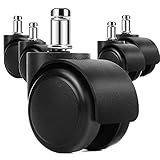
MaxGear 2" Office Chair Wheels Heavy Duty Replacement, Mute Rubber Rotating Desk Chair Caster Wheels, Safe for All Floors Including Hardwood, Only Fits 11mm Stem, NOT for 10mm or IKEA Chairs, Set of 5

5 Pack 3 Inch Office Chair Casters, Heavy Duty PU Swivel Wheels with 11x22mm Stem, 650LBS Load Capacity, Floor-Safe & Silent for Office/Gaming Chairs, No Chair Mat Needed(Black)
Step 3: Inspect and Replace a Loose or Cracked Base
If your wheels are fine but the chair still rocks or leans, the problem may be the base itself. Over time, plastic or nylon bases can crack at the center hub or along the legs.
- Look for visible damage: Examine the center where the gas lift enters the base and where each leg meets the hub. Any crack, even a small one, weakens the structure and can cause wobble.
- Test for flex: Hold the base and gently flex each leg. Excessive flex or creaking often means the base is near failure.
- Replace a damaged base: If you see cracks, do not try to glue or tape the base. Instead, swap it out for a sturdy metal or reinforced replacement base that matches your chair’s gas lift size and caster stem type.
Step 4: Fix a Loose Base-to-Gas-Lift Connection
The gas lift cylinder has a tapered end that fits into the base. If that connection wears out or corrosion builds up, the chair can wobble even if everything else looks fine.
- Test the connection: Hold the base with one hand and the gas lift with the other. Try moving them in opposite directions. Any noticeable side play indicates wear.
- Decide what to replace: If the base socket is worn or cracked, replace the base. If the tapered end of the cylinder is damaged or rusted, replace the gas lift.
- Consider replacing both: For older chairs, the most stable fix is to replace both the base and the cylinder with a compatible set, such as a base and gas lift kit.

DOZYANT Gas Lift Cylinder Replacement,Hydraulic Pneumatic Shock Piston Heavy Duty (450 lbs) Universal Size Fits Most Executive Office Chairs, Highest End Class 4
Omyoffice 5.5 inch Office Chair Gas Lift Cylinder-Office Chair Replacement Parts,Universal Size Fits Most Chairs,Heavy Duty Gas Lift Hydraulic/Pneumatic Piston(Black)

FLKQC Universal Office Chair Gas Lift Cylinder Replacement, 5.5" Long Stroke Gas Lift, Heavy Duty Gas Lift Hydraulic/Pneumatic Piston for Office Chair/Gaming Chair
Step 5: How to Remove and Replace the Gas Lift Cylinder
Removing a gas lift cylinder can be the trickiest part of the repair, especially if it has been in place for years. Be patient and work slowly.
- Separate the seat from the cylinder:
- Flip the chair upside down with the seat supported.
- Loosen the bolts holding the mechanism to the seat, then lift the seat and mechanism off the cylinder if needed.
- Remove the cylinder from the base:
- Tap around the metal collar where the cylinder enters the base using a rubber mallet. Gentle, repeated taps are better than heavy hits.
- If it is stuck, apply a small amount of penetrating oil at the joint and let it sit for a few minutes before trying again.
- In stubborn cases, use a pipe wrench on the cylinder (near the base) and twist while pulling.
- Install the new cylinder:
- Insert the narrow end of your new office chair gas cylinder into the base until it seats firmly.
- Place the mechanism and seat back onto the wider end of the cylinder, making sure it sits straight.
- Sit gently on the chair to fully seat the tapers.
Step 6: Tighten the Seat Plate and Mechanism Bolts
Even if your base and wheels are perfect, loose bolts where the seat attaches to the mechanism can make the chair feel unstable.
- Locate all bolts: Find the bolts that connect the seat to the mechanism plate, and the bolts that connect the mechanism plate to the cylinder or mounting bracket.
- Tighten evenly: Use the appropriate hex key or screwdriver to tighten each bolt a little at a time, working in a crisscross pattern to keep the plate level.
- Add thread locker if needed: If bolts work loose over time, apply a drop of medium-strength thread locker to the threads, then reinstall and tighten.
When to Repair and When to Replace the Chair
Not every wobbly chair is worth saving. Use these guidelines to decide whether to repair or replace.
- Repair is usually worth it when:
- Only the casters, base, or gas lift are damaged.
- The seat and backrest are still comfortable and not badly worn.
- The chair is high-quality or ergonomic and would be expensive to replace.
- Replacement may be better when:
- Multiple parts are cracked or bent (base, mechanism, armrests).
- The seat foam is flat and the upholstery is torn.
- The chair was very cheap to begin with and the parts cost more than half the price of a new chair.
If you decide to repair, a bundled office chair repair kit is often the most cost-effective way to get matching parts.

Salbree Office Chair Hero Fix Attaches Clamps to Large Cylinder Piston Stops Your Chairs from Sinking When Computer Hydraulic Lift Has No Gas Stop Replacement

Besezx Leather Repair Patch Tape Kit, Self Adhesive Leather Repair for Furniture, Couch, Sofa, Car Seats,Office Chair,Vinyl Repair Kit.3.1inx60in

Office Chair Sinking Fix Kit to Stop Sink|Made of Steel Strong Enough to Support Maximum 800 Pounds | No More Sink &No Need to Replace Chair Gas Lift Cylinder - Silver
How to Prevent Your Chair From Becoming Wobbly Again
Once you have fixed your loose base, a little maintenance will keep your chair stable for years.
- Inspect and tighten seat and mechanism bolts every few months.
- Avoid leaning heavily on the very edge of the seat or standing on the chair.
- Use appropriate casters for your floor type; for example, soft-rolling hardwood-safe chair wheels on wood or laminate.
- Keep the floor clean around the chair so debris does not stress the wheels or base.
- If you are a heavier user, consider upgrading to a heavy-duty chair base rated for higher weight.
Final Thoughts
A wobbly office chair is annoying, but it is also a warning sign that something in the base, wheels, or gas lift needs attention. By carefully diagnosing where the movement is coming from and replacing any worn parts with quality components, you can restore your chair to a stable, safe, and comfortable condition without buying a brand new one.

