If you spend long hours at a desk, the wrong office chair can wear you down in ways that are easy to underestimate. A chair that feels acceptable for 30 minutes can start causing stiffness, pressure, fatigue, and posture problems after three, five, or eight hours. That is why choosing a chair for long work sessions is different from choosing one that only feels comfortable for a quick sit test.
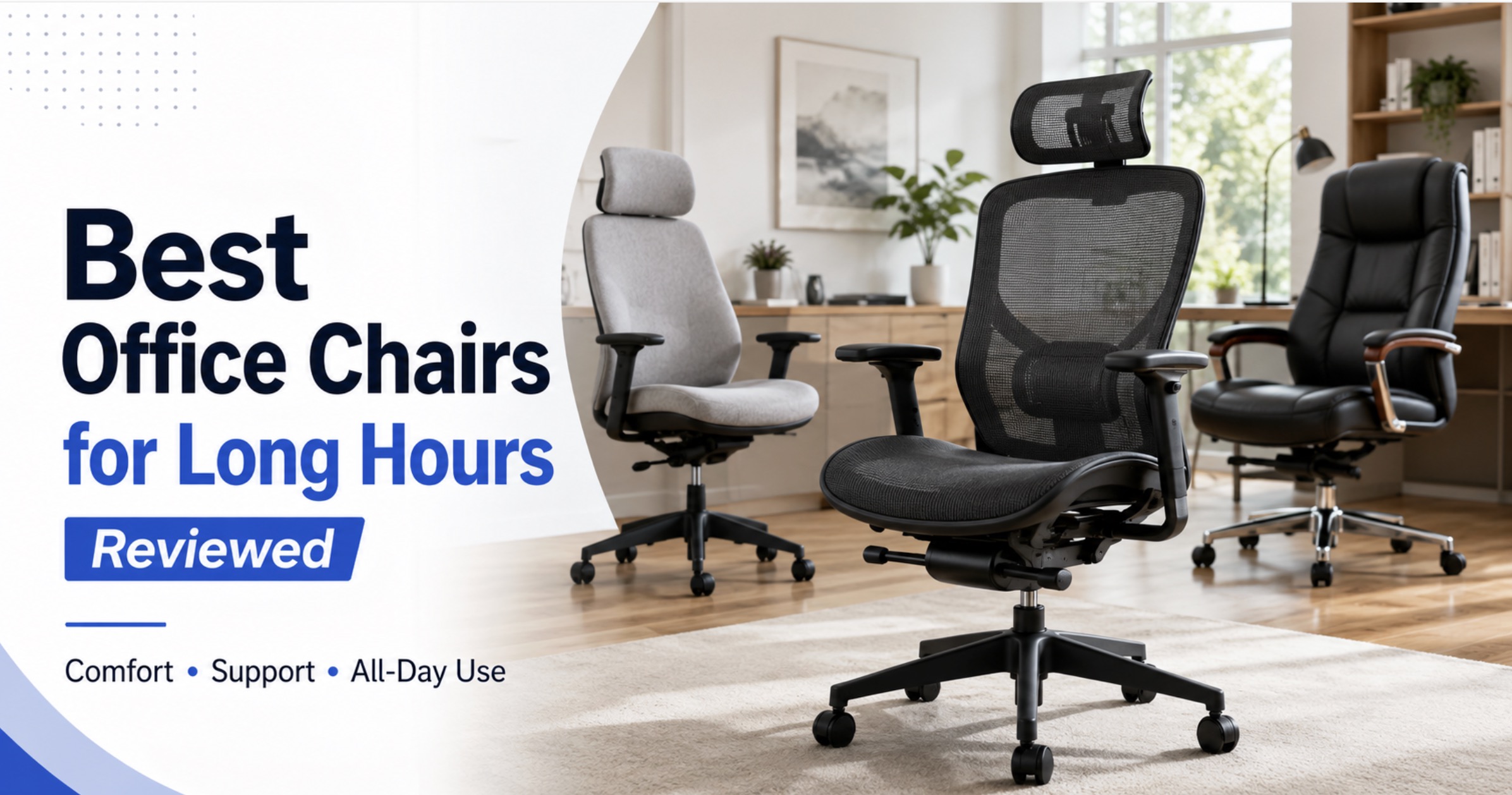
The best office chair for long hours is not just the one with the thickest padding or the flashiest ergonomic features. What matters more is how the whole chair performs over time: lumbar support, seat comfort, breathable materials, recline quality, armrest position, and whether the chair continues to feel supportive instead of tiring as the day goes on.
If you are comparing real options, it helps to browse ergonomic office chairs for long hours, office chairs with lumbar support, and high-back ergonomic office chair options so you can see the main categories and feature sets side by side.
This guide breaks down what actually matters when you sit for hours every day, which chair styles tend to hold up best, and which kinds of options are worth comparing first.
What Makes an Office Chair Good for Long Hours?
A good office chair for long hours needs to do more than feel soft. It has to support you in a way that reduces fatigue across an entire workday.
The most important features are usually:
- Reliable lumbar support: so your lower back is supported instead of collapsing as the hours pass.
- A seat that stays comfortable: not one that feels fine at first but bottoms out or creates pressure later.
- Usable recline: because sitting fully upright all day usually creates more fatigue than supported movement.
- Breathability: especially if you work in a warm room or sit for extended sessions without many breaks.
- Armrests that actually fit: poor arm support can create shoulder, upper-back, and neck tension over time.
- A chair size that matches your body: seat depth, back height, and width matter more than many buyers realize.
For long hours, comfort is not just about softness. It is about support that still feels good when the day is half over.

Ergonomic Office Chair for Long Hours, 4" Molded Foam Cushion, 350 LBS | Adjustable Lumbar, Flip-Up Arms, Breathable Mesh, Tilt & Rock, BIFMA-Tested, 5-Year Warranty, 24/7 Support

Ergonomic Office Chair for Long Hours and Back Pain, 3.5" Cushion, 330 LBS | 4-Way Lumbar, 3D Headrest, 3.5" Thick Cushion, Flip-Up Arms, Breathable Mesh Back, Tilt & Rock, 5-Year Warranty, 24/7 Support

Jurkosp Ergonomic Home Desk Chair with Footrest, Comfy Mesh Office Chair | Breathable Mesh, Massage Lumbar Support, 155° Recline, Retractable Footrest, 2D Headrest, Thick Cushion
Why Some Chairs Feel Fine at First but Terrible Later
This is one of the biggest reasons people buy the wrong chair. A lot of chairs are designed to impress during the first few minutes, not after a full workday.
Common reasons a chair becomes uncomfortable over time include:
- The seat foam compresses too quickly.
- The lumbar support is too weak, too flat, or too aggressive.
- The recline is poor, so you stay in one rigid posture all day.
- The material traps heat and starts feeling sticky or heavy.
- The armrests do not support your natural desk height.
- The chair becomes unstable or develops play in the base or mechanism.
If your current chair already feels loose or structurally off, read Why Your Office Chair Wobbles and How to Fix It Fast because instability alone can make a chair far more tiring during long sessions.
What to Focus on When Comparing Chairs for All-Day Use
To keep this guide useful, this comparison focuses on the things that matter most once you move beyond quick showroom-style impressions.
The key factors worth comparing are:
- Whether the chair stays supportive after several hours.
- How good the lumbar support feels in real use.
- Whether the seat feels breathable or traps heat.
- How well the recline supports movement throughout the day.
- Whether the adjustments let the chair fit your body instead of forcing a generic posture.
- Whether the price actually makes sense for the comfort and durability offered.
That is what separates a chair that is merely acceptable from one that is genuinely suited to long work sessions.
Best Types of Office Chairs for Long Hours
Not everyone needs the exact same kind of chair. In practice, the best long-hours options usually fall into a few main categories.
1. Best All-Around Choice: Adjustable Ergonomic Mesh Chairs
For many people, a good ergonomic mesh chair is the safest starting point for long hours. Mesh chairs tend to stay cooler, feel lighter, and reduce the heat buildup that can make long sitting sessions more uncomfortable than expected.
This type is often best for:
- People who work full days at a desk.
- Users who overheat easily.
- Buyers who want a modern ergonomic feel with good airflow.
The most useful options to compare here are ergonomic mesh office chairs with lumbar support that also include recline tension and adjustable armrests.
2. Best for Plush Comfort: Cushioned Ergonomic Chairs
Some users simply do better in a supportive cushioned chair, especially if they dislike the firmer suspended feel of mesh seats. A good cushioned ergonomic chair can feel more forgiving at first sit and more pressure-relieving for certain body types.
This type is often best for:
- Users who want a softer seating surface.
- People who do not enjoy taut mesh seat tension.
- Buyers who prefer a more traditional office-chair feel.
The important thing is to compare cushioned ergonomic office chairs that still offer proper lumbar support and recline, not just thick foam.
3. Best for Premium All-Day Comfort: High-End Ergonomic Chairs
If you sit for a living and budget allows, premium ergonomic chairs are often worth serious consideration. They typically offer stronger recline systems, more refined lumbar designs, and better adjustment ranges than low-cost chairs.
This type is often best for:
- People who spend most of the day seated.
- Users who need a more precise ergonomic fit.
- Buyers who care about long-term comfort more than initial price.
It is useful to compare premium ergonomic office chair options and look for models with strong lumbar systems, adjustable seats, and a reputation for all-day support.
4. Best for Bigger Frames: Big-and-Tall Ergonomic Chairs
A chair can have excellent features on paper and still be uncomfortable if it is too small for the user. Bigger users often need wider seats, taller backs, stronger frames, and better-rated cylinders.
This type is often best for:
- Taller users.
- Heavier users.
- Anyone who feels cramped in standard office chairs.
For this group, comparing big and tall ergonomic office chairs usually makes far more sense than trying to stretch a standard-size chair beyond its comfort zone.
Strong Office Chair Categories to Compare
If you want the quickest practical breakdown, these are the chair categories that make the most sense to compare when long hours are the priority.
Best All-Around Pick for Long Hours
A fully adjustable ergonomic mesh chair is often the safest overall recommendation because it balances breathability, support, and decent all-day usability.
- Look for adjustable lumbar support.
- Prioritize a usable recline instead of a rigid upright-only setup.
- Make sure the seat dimensions fit your height and leg length.
A strong place to start is comparing adjustable lumbar mesh office chairs with clear spec sheets and consistent comfort-focused feedback.
Best Pick for Softer All-Day Comfort
If you prefer a padded seat and back, a supportive cushioned ergonomic chair may be the better match.
- Look for high-density foam rather than just thick foam.
- Avoid chairs that feel plush but have weak back support.
- Choose models with proper tilt and recline controls.
Good comparison terms here include high-density foam ergonomic office chairs and executive ergonomic office chairs with lumbar support.
Best Pick for Budget-Conscious Buyers
If your budget is limited, focus on getting the essentials right instead of chasing premium branding.
- Support matters more than flashy styling.
- Real adjustments matter more than decorative padding.
- Stability and fit matter more than “luxury” marketing.
That means comparing budget ergonomic office chairs with lumbar support rather than picking the cheapest chair that only looks ergonomic.
Best Pick for Home Office Workdays
For home office users, the sweet spot is often a mid-range ergonomic chair that combines support, breathability, and comfort without the price of a top-tier premium chair.
- Look for chairs that encourage movement during long sessions.
- Make sure the material feels livable for all-day use.
- Do not ignore armrest height and width adjustment if you type a lot.
Comparing home office ergonomic chairs for long hours is a good way to narrow this category down.
What to Avoid if You Sit for Long Hours
Some chairs can feel impressive online but turn out to be poor all-day choices.
Try to avoid:
- Chairs with weak or fixed lumbar support.
- Very soft foam that bottoms out quickly.
- Cheap mesh seats that sag or feel harsh after time.
- Rigid backs with little or no usable recline.
- Chairs with poor seat depth or narrow dimensions for your frame.
Long-hours comfort usually falls apart when a chair traps you in one tiring position or loses support as the day goes on.
Should You Repair Your Current Chair Instead of Replacing It?
Sometimes the smarter move is not buying a brand-new chair. If your current chair was originally comfortable but now feels worse, repairs may restore enough support to keep it usable.
That may be worth it when:
- The frame and mechanism are still solid.
- The issue is a worn gas lift, arm, wheel, or seat component.
- The chair fit you well before parts began wearing out.
It is usually less worth it when:
- The chair was never that comfortable to begin with.
- The foam or mesh has failed badly.
- Several components are worn or unstable at once.
- The chair is old enough that multiple future problems are likely.
If you are deciding whether your current chair is still worth saving, How Often Should Office Chairs Be Replaced (How Long Do They Last?) is a useful companion guide.

GTPOFFICE Executive Office Chair with Comfortable Lumbar Support, Ergonomic Gaming Chair with Flip-up Armrests & Zoned Pressure-Relief Cushion, Comfy PU Leather Desk Chair, Black

Marsail Ergonomic Office Chair: Office Desk Chair with High Back Mesh and Adjustable Lumbar Support Rolling Work Swivel Task Chairs with Wheel 3D Armrests and Headrest

TRALT Office Chair Ergonomic Desk Chair with Lumbar Support Black, 1 | 330 LBS Home Office Desk Chairs with Headrest, Reading Chair with Flip-up Armrests, Comfortable Computer Chairs Gaming Chair
How to Choose the Best Chair for Your Workday
The right chair depends on what wears you down most during long sessions.
If heat and sweat are the main problem:
- Start with breathable mesh chairs.
- Look for airflow in both the back and seat if possible.
If pressure and seat discomfort are the main problem:
- Pay close attention to seat foam quality and seat shape.
- Avoid overly hard or overly soft seats.
If your lower back gets tired first:
- Prioritize adjustable lumbar support and recline.
- Avoid flat-back chairs with weak contouring.
If shoulder and neck tension build up over time:
- Look closely at armrest adjustability.
- Make sure the chair fits your desk and keyboard height properly.
A long-hours chair works best when it matches the kind of fatigue your current setup creates.
So, What Is the Best Office Chair for Long Hours?
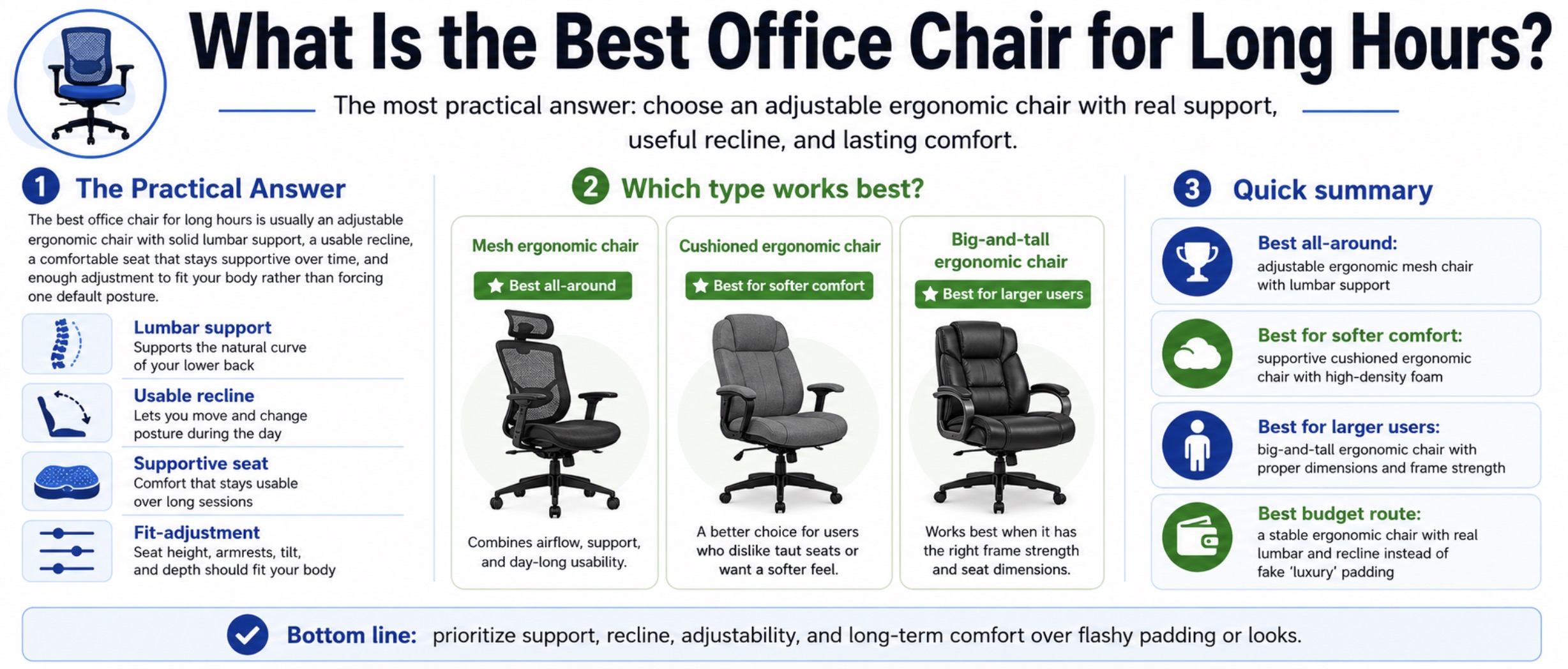
If you want the most practical answer, the best office chair for long hours is usually an adjustable ergonomic chair with solid lumbar support, a usable recline, a comfortable seat that stays supportive over time, and enough adjustment to fit your body rather than forcing one default posture.
For many people, that means a well-built ergonomic mesh chair is the best all-around option because it combines airflow, support, and day-long usability. For others, especially users who dislike taut seats or prefer a softer feel, a supportive cushioned ergonomic chair is the better choice. Bigger users usually get the best results from big-and-tall ergonomic models with the right frame and seat dimensions.
A useful summary looks like this:
- Best all-around: adjustable ergonomic mesh chair with lumbar support.
- Best for softer comfort: supportive cushioned ergonomic chair with high-density foam.
- Best for larger users: big-and-tall ergonomic chair with proper dimensions and frame strength.
- Best budget route: a stable ergonomic chair with real lumbar and recline instead of fake “luxury” padding.
Conclusion
The best office chairs for long hours are the ones that stay supportive after hours of real use, not just the ones that feel pleasant for a few minutes. That usually means looking beyond marketing claims and focusing on lumbar support, recline, seat comfort, breathability, and overall fit.
If you want the safest starting point, compare ergonomic office chairs for long hours with clear adjustment features and realistic dimensions. If you know you prefer a softer sit, compare cushioned ergonomic office chair options. If your current chair has become unstable or structurally tired, fix that first before assuming the concept of the chair is the problem.
The best chair for long hours is the one that still feels supportive late in the day—when most bad chairs finally reveal themselves.

HYEJDRV Heavy Duty 500LBs Office Chair Tilt Control Mechanism Replacement Parts, Office Chair Swivel Tilt Base W/6" x 10.2" Mounting Holes - Black

Omyoffice 5.5” Office Chair Gas Lift Cylinder Replacement, Class 4 Piston | Heavy-Duty 1000 lbs, Hydraulic Pneumatic Gas Lift, Universal Fit Most Executive Gaming Desk Chairs, Black
