When people shop for a premium ergonomic office chair, the comparison that comes up again and again is Herman Miller vs Steelcase. These are two of the biggest names in high-end office seating, and both brands have built loyal followings around comfort, build quality, long-term durability, and serious ergonomic design. The problem is that they do not approach seating in exactly the same way, which makes the “better” brand depend a lot on your body type, work style, adjustment preferences, and budget.
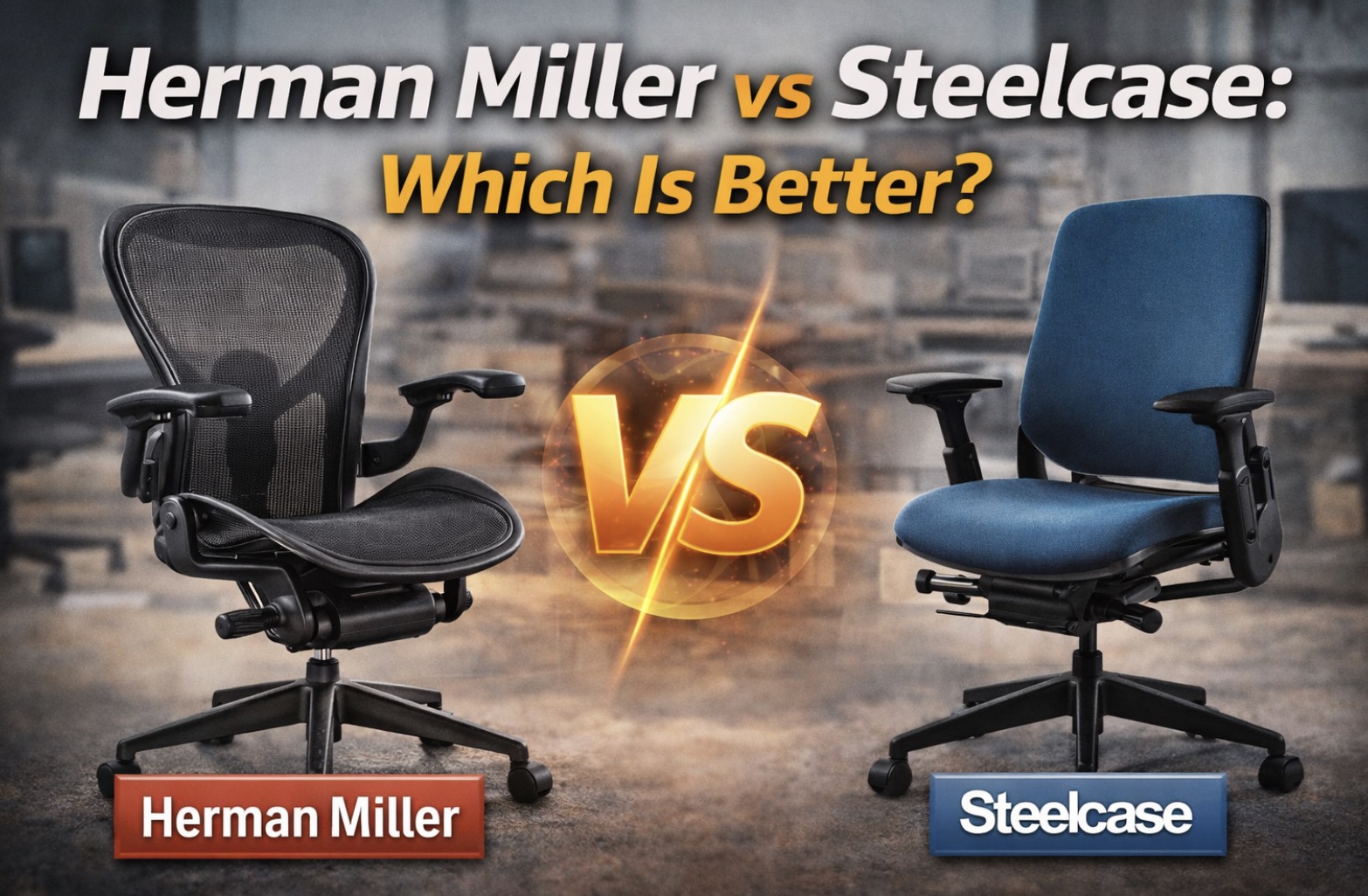
Herman Miller is often associated with iconic chairs like the Aeron and the Embody, with a strong focus on distinctive design, breathable materials, and posture-supporting ergonomics. Steelcase is best known for chairs like the Leap, Gesture, and Series line, with a reputation for highly adjustable support, flexible back systems, and chairs that adapt well to different working positions.
If you are deciding between the two, the real question is not which brand is more famous. It is which one fits your needs better. For some users, Herman Miller feels like the gold standard. For others, Steelcase offers a more forgiving, more adjustable, and sometimes more practical fit for daily use.
It can also help to compare a few Herman Miller Aeron chair listings, Steelcase Leap chair listings, and ergonomic office chair lumbar support options so you can see how these brands compare to the broader chair market on price, features, and replacement-part availability.
Brand Philosophy: Design Icon vs Adjustment-First Practicality
Herman Miller chairs often feel like industrial design products as much as office tools. The brand has a long reputation for visually distinctive chairs, premium materials, and ergonomic concepts that are engineered into the structure of the chair itself. The Aeron, for example, is instantly recognizable and built around a mesh seating concept that feels very different from a traditional padded office chair.
Steelcase chairs, by contrast, are often a little less visually dramatic but extremely strong on day-to-day adjustability. Many users end up preferring Steelcase because the chairs feel easier to fine-tune. The backrest shape, armrest movement, seat depth, and recline behavior often feel more accommodating, especially if you like to shift posture throughout the day.
So right away, the comparison often starts here:
- Herman Miller tends to emphasize iconic design, advanced materials, and a more engineered feel.
- Steelcase tends to emphasize flexibility, adjustable ergonomics, and a more adaptable sitting experience.
Neither approach is automatically better. It depends on whether you prefer a chair that “fits by design” or one that “fits by adjustment.”

Herman Miller Classic Aeron Chair - Size B, Posture Fit

Herman Miller Classic Aeron Task Chair: Highly Adj w/Lumbar Pad - Tilit Limiter w/Seat Angle Adj - Fully Adj Vinyl Arms - Carpet Casters
Steelcase Leap Office Chair, Ergonomic Back Support, Onyx

Steelcase Leap Office Chair, Adjustable Support, Carpet Floors, Blue Nickel

Steelcase Leap Office Chair, Ergonomic Back Support, Cobalt
Comfort: Which One Feels Better for Long Hours?
This is where the comparison gets personal. Herman Miller and Steelcase both make chairs designed for all-day sitting, but they deliver comfort in different ways.
Herman Miller chairs—especially the Aeron—often feel cooler and more breathable because of their mesh construction. If you work in a warm room, sweat easily, or dislike dense seat foam, that can be a major advantage. The sitting experience can feel very supportive and clean, but some users find the structure less forgiving if the size, fit, or posture match is not quite right.
Steelcase chairs—especially the Leap and Gesture—usually feel more cushioned and more adaptable. The seat and back tend to contour more naturally to a wider range of sitting habits, including upright work, leaning back, and shifting positions during the day. For users who prefer a softer or more adjustable feel, Steelcase often wins on immediate comfort.
In practical terms:
- Choose Herman Miller if you want a cooler, more structured sitting experience.
- Choose Steelcase if you want a more padded, adjustable, and forgiving feel.
Ergonomics: Which Brand Offers Better Support?
Both brands take ergonomics seriously, but they focus on different strengths.
Herman Miller tends to shine when the chair design itself closely matches your body and sitting habits. Chairs like Aeron and Embody are engineered with very specific support concepts. Aeron is famous for its posture-focused support and mesh suspension, while Embody is known for pressure distribution and back support that responds to movement.
Steelcase tends to shine when you want lots of user-controlled tuning. Chairs like Leap and Gesture offer extensive arm adjustment, supportive recline behavior, and back systems designed to move with the spine. Many users find Steelcase easier to “dial in” over time because the controls feel intuitive and the fit range is broad.
If you change posture often, share your chair with another user, or like to tweak settings regularly, Steelcase may have the edge. If you want a chair with a more distinctive ergonomic design language and a premium engineered feel, Herman Miller often stands out.
Build Quality and Durability
Both Herman Miller and Steelcase are known for high-quality construction compared to mainstream office chair brands. This is one of the main reasons buyers are willing to pay premium prices in the first place.
Herman Miller chairs often feel exceptionally refined in the frame, materials, and design execution. The components look and feel premium, and many models are built to last for years with proper use.
Steelcase also has a strong reputation for durability, particularly in commercial office environments where chairs get heavy daily use. Many people describe Steelcase chairs as workhorses—less flashy in some cases, but extremely dependable over time.
In terms of pure durability, this is a close contest. Both are strong. The difference usually comes down less to “which lasts longer” and more to which design wears better for your body and work habits.
If you are also thinking about whether a premium chair is worth repairing down the line, How Often Should Office Chairs Be Replaced (How Long Do They Last?) is a useful related read.
Adjustability: Steelcase Usually Has the Edge
If this comparison is narrowed down to pure adjustability, Steelcase often comes out ahead.
Many Steelcase chairs offer:
- Very flexible 4D armrests.
- Easy seat-depth adjustments.
- Recline systems that are simple to control.
- Back support that feels adaptable across different postures.
Herman Miller chairs are adjustable too, but some users find them more specific in how they want to be sat in. Aeron in particular can feel fantastic when it fits correctly, but less forgiving when it does not. That is not necessarily a flaw—it just means the chair may feel more opinionated.
So if your top priority is maximum control and adaptability, Steelcase is often the safer recommendation.
Mesh vs Cushion: A Huge Part of the Decision
One of the biggest differences in real-world use is the seat and back material experience.
Herman Miller is strongly associated with mesh seating, especially through the Aeron. Mesh gives you excellent airflow, a modern feel, and a suspended sitting experience that many users love.
Steelcase is more associated with traditional upholstered seating, though it also offers breathable and flexible designs. For many users, the extra cushioning makes long work sessions feel more natural and less rigid.
This decision matters more than many people expect:
- If you hate heat buildup and like a taut, supportive feel, Herman Miller mesh may be ideal.
- If you want a chair that feels softer and more conventional at first sit, Steelcase often feels easier to like immediately.
Herman Miller Classic Aeron Chair - Size B, Posture Fit
Herman Miller Classic Aeron Task Chair: Highly Adj w/Lumbar Pad - Tilit Limiter w/Seat Angle Adj - Fully Adj Vinyl Arms - Carpet Casters
Best Known Chairs in the Comparison
When most people say Herman Miller vs Steelcase, they are usually thinking about a few flagship models.
On the Herman Miller side:
- Aeron
- Embody
- Mirra 2
- Sayl
On the Steelcase side:
- Leap
- Gesture
- Series 1
- Series 2
In many head-to-head buyer decisions, the real matchup is Aeron vs Leap, or Embody vs Gesture. If you are shopping broadly, it can be useful to compare Herman Miller Embody chair options and Steelcase Gesture chair options alongside the more famous Aeron and Leap models.
Price and Value: Which One Is More Worth the Money?
Neither brand is cheap. Herman Miller and Steelcase both sit in the premium end of the office chair market, and new flagship models can cost dramatically more than mainstream ergonomic chairs.
That said, value is not just about purchase price. It is also about how well the chair fits you, how long it lasts, how well it holds up to daily work, and whether the chair still feels good after years of use.
Herman Miller often feels like the higher-design purchase. Steelcase often feels like the more adjustment-driven practical purchase. That means:
- Herman Miller may feel more “worth it” if you love the design, fit the chair well, and want a premium iconic product.
- Steelcase may feel more “worth it” if you care most about usability, fit flexibility, and ergonomic tuning.
For buyers on tighter budgets, used and refurbished versions of both brands are common. That can be a smart way to access premium ergonomics without paying full retail.
Repairs, Parts, and Long-Term Ownership
For long-term ownership, premium chairs are usually more repair-worthy than cheap chairs. If a Herman Miller or Steelcase chair develops an issue after years of use, many owners consider replacement parts, repairs, or refurbishing before replacing the entire chair.
This is where brand reputation helps, but model complexity matters too. Chairs with more moving systems can be wonderful to use, but they also give you more parts that may eventually need attention. If you are evaluating ownership over many years, that is worth considering.
If your current premium chair already feels unstable, noisy, or mechanically off, Why Your Office Chair Wobbles and How to Fix It Fast can help you decide whether the issue is minor, repairable, or a sign that replacement is the better move.
Which Brand Is Better for Different Buyers?
Here is the most honest answer: the better brand depends on what kind of sitter you are.
Herman Miller is often better for:
- Users who want iconic design and premium visual appeal.
- People who prefer breathable mesh seating.
- Buyers who want a chair with a more engineered, design-led identity.
- Users who fit especially well into the Aeron or Embody design philosophy.
Steelcase is often better for:
- Users who want maximum adjustability.
- People who prefer a more cushioned, adaptable feel.
- Shared workspaces where multiple users may use the same chair.
- Buyers who prioritize practical ergonomics over iconic design.
Steelcase Leap Office Chair, Ergonomic Back Support, Onyx
Steelcase Leap Office Chair, Adjustable Support, Carpet Floors, Blue Nickel
Steelcase Leap Office Chair, Ergonomic Back Support, Cobalt
So, Which Is Better?
If you want the most balanced answer, Steelcase is often the safer pick for the widest range of users because its flagship chairs tend to be highly adjustable, easier to tune, and more forgiving across different body types and sitting styles.
But Herman Miller often wins for buyers who want standout design, premium materials, superior airflow, and a chair experience that feels more distinctive and iconic.
So the smartest conclusion is this:
- Steelcase is often better for adaptability.
- Herman Miller is often better for design identity and mesh-focused ergonomics.
If you can test both in person, that is the best-case scenario. If you cannot, focus less on the brand name and more on the exact model, seat material, adjustment style, and the kind of sitting experience you actually prefer.
Conclusion
Herman Miller vs Steelcase is one of those comparisons where there is no universal winner—only a better fit for a specific user. Herman Miller delivers some of the most iconic and design-forward ergonomic chairs on the market, especially for users who love mesh support, premium construction, and a more engineered feel. Steelcase delivers some of the most adaptable and user-friendly ergonomic chairs available, especially for buyers who want extensive adjustments and a more forgiving seating experience.
If you want the simplest takeaway, here it is: choose Herman Miller if you want a chair with standout design, airflow, and a highly distinctive ergonomic experience. Choose Steelcase if you want a chair that is easier to tune, easier to share, and often easier to live with across long workdays and different sitting styles.
Whichever way you go, compare the exact model—not just the logo. That is the real key to buying the better chair.

HYEJDRV Heavy Duty 500LBs Office Chair Tilt Control Mechanism Replacement Parts, Office Chair Swivel Tilt Base W/6" x 10.2" Mounting Holes - Black

Besitu 500Lbs Office Chair Replacement Parts, w/ 6'' x 10.2" Mounting Holes Chair Base Heavy Duty Plate Swivel Tilt Control Seat Mechanism for Executive and Gaming Chairs
