Steelcase Amia is one of those used office chairs that can be a really smart buy if you know what to check. It is simpler than the Leap, but still comfortable, durable, and easy to find refurbished online.
Is a Used/Refurbished Steelcase Amia Worth Buying?
A used or refurbished Steelcase Amia can definitely be worth buying if you want a durable, comfortable, commercial-grade task chair without paying the full new-chair price. The Amia is popular because it has a clean design, a supportive padded seat, adjustable arms on many models, seat-depth adjustment, recline tension, back lock, and Steelcase’s LiveLumbar-style back support system built into the backrest.
The Amia is not as complex as the Steelcase Leap, but that can actually be a good thing on the used market. There are fewer adjustment parts to break, fewer controls to test, and fewer confusing model variations. It is a straightforward ergonomic chair that works well for home offices, workstations, study desks, and general computer use.
One of the biggest reasons the Amia is attractive secondhand is that many chairs come from corporate offices, universities, government buildings, call centers, and office liquidations. These chairs were built for full-time workplace use, so a well-maintained Amia can still feel solid after years of service.
A used Amia is especially worth considering if the seat foam still feels supportive, the backrest is not cracked, the height adjustment works, the recline feels smooth, and the armrests are not badly damaged. Cosmetic scratches on the frame or base are common and usually not a major problem, but structural damage, sinking cylinders, badly worn fabric, and broken controls should reduce the value significantly.
A refurbished Steelcase Amia can be even better when the seller has done real restoration work. A good refurbisher may clean the chair thoroughly, replace worn upholstery, install new arm pads, replace the gas cylinder, add new casters, inspect the recline mechanism, and provide a seller-backed warranty. That makes it safer than buying an unknown as-is chair from a random seller.
The Amia is also a good used-chair choice for people who want a premium office chair but do not need every advanced adjustment from the Leap or Gesture. If you want strong build quality, a comfortable cushion, good back support, and easy daily use, a secondhand Amia can be a very practical option.
However, it is only worth buying when the final price makes sense. Since refurbished Amia chairs are widely available, do not overpay for a heavily used one with no warranty. Always compare the cost of a used chair, shipping, possible replacement parts, and return risk against the price of a professionally refurbished or new chair.
Used vs Refurbished Steelcase Amia: What Is the Difference?
A used Steelcase Amia is usually sold in its current condition. It may come from a private home office, office liquidation, warehouse resale, or business furniture dealer. The seller may wipe it down and test it briefly, but a used listing does not always mean the chair has been repaired, deep-cleaned, or fully inspected.
Used Amia chairs may have frame scuffs, fabric stains, worn arm pads, compressed seat foam, dirty casters, loose controls, or an older gas cylinder. Some used Amias are excellent deals, especially if they were lightly used in a home office. Others may look fine in photos but feel worn once you sit in them.
A refurbished Steelcase Amia should go through a more detailed process before resale. Depending on the seller, refurbishment may include cleaning the chair, replacing upholstery, replacing arm pads, installing a new gas cylinder, changing the casters, inspecting the recline mechanism, checking the seat-depth slider, and testing all controls.
A properly refurbished Amia should feel cleaner, more reliable, and closer to new than a basic used chair. The best sellers clearly explain what parts were replaced and what parts remain original. They may also offer a return period or warranty, which is especially valuable when buying online.
The word “refurbished” is not always used consistently. One seller may fully restore the chair with new fabric, arm pads, cylinder, and wheels. Another seller may simply clean a used Amia and call it refurbished. Before paying a higher price, ask exactly what was done to the chair.
A remanufactured Steelcase Amia usually means a more complete rebuild, but sellers may use “refurbished,” “renewed,” and “remanufactured” differently. The important thing is not the label. The important thing is the actual work performed, replacement parts used, warranty offered, and return policy.
How Much Does a Used or Refurbished Steelcase Amia Cost?
The price of a used or refurbished Steelcase Amia depends on condition, age, upholstery, arm type, cylinder height, base finish, seller reputation, warranty, and shipping cost. Local used chairs usually cost less than shipped refurbished chairs because the Amia is large and expensive to package.
A practical price guide is:
- $75–$150: Usually an older used Amia from a local seller, office liquidation, or business furniture clearance. Expect cosmetic wear, older fabric, scuffed plastic, and little or no warranty. Test every function before buying.
- $150–$250: A decent used Amia in working condition with normal wear, functioning height adjustment, working recline, usable armrests, and decent seat padding. This is often a good local-pickup range.
- $250–$350: A cleaner used Amia, a basic refurbished chair, or an online listing that may include shipping. Check whether the chair has new parts or is simply cleaned and resold.
- $350–$500: A more professionally refurbished Amia with new upholstery, new arm pads, a new gas cylinder, new casters, upgraded seat foam, a return period, or a seller-backed warranty.
- $500 or more: Usually only worth considering if the chair is heavily restored, nearly new, includes premium options, has strong warranty coverage, or comes from a reputable refurbisher with excellent support.
The cheapest Amia is not always the best deal. A $120 chair that needs new fabric, new arm pads, a replacement cylinder, and cleaning can end up costing more than a $350 refurbished chair that already includes those upgrades.
Shipping is also a major factor. A used Amia may look inexpensive until you add oversized shipping, taxes, and possible return freight. Before buying online, compare the final delivered cost with a Steelcase Amia office chair on Amazon and similar refurbished listings.
Also check the cost of common replacement parts. If the chair needs new Steelcase Amia arm pads, a Steelcase Amia gas cylinder, or Steelcase Amia replacement wheels, add those costs before deciding whether the listing is actually a bargain.
Where to Buy a Used or Refurbished Steelcase Amia Online
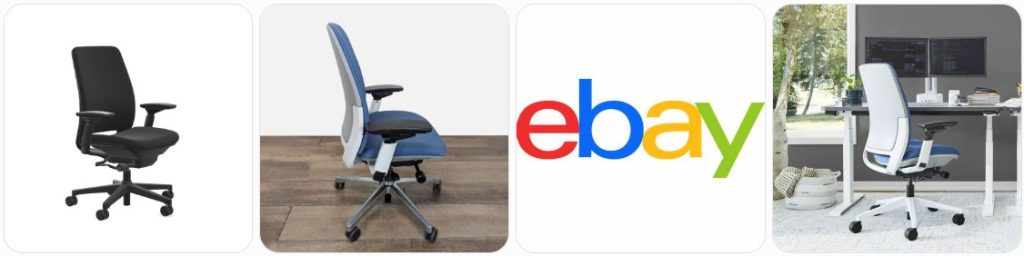
eBay is one of the easiest places to find used, open-box, refurbished, and remanufactured Steelcase Amia chairs. You can often find listings from office furniture liquidators, refurbishers, individual sellers, and commercial resellers.
When searching eBay, use several search terms instead of only one. Try “Steelcase Amia,” “Steelcase Amia chair,” “Steelcase Amia task chair,” “refurbished Steelcase Amia,” “remanufactured Steelcase Amia,” and “Steelcase Amia fully adjustable.” Some sellers do not title their listings perfectly, so broader searches may reveal more options.
Read the listing title carefully, but do not rely on it alone. Some listings use phrases like “fully loaded,” “refurbished,” or “excellent condition” without explaining what that actually means. For the Amia, you should confirm whether the chair has adjustable arms, seat-depth adjustment, working recline tension, back lock, working height adjustment, and intact back support.
Look closely at the photos. A good eBay listing should show the actual chair or clearly explain if the images are representative of a batch. You want to see the seat, backrest, arm pads, underside label, base, casters, controls, and any cosmetic flaws. If the seller only uses stock photos, ask for real photos before buying.
The underside label is important because it can help confirm that the chair is a genuine Steelcase Amia and can show manufacturing details. Ask the seller for a clear photo of the label under the seat if it is not already shown.
Check the condition description. “Pre-owned” usually means the chair is used as-is. “Seller refurbished” should mean the chair was cleaned, inspected, or repaired, but you still need to ask what was actually replaced. “Open box” may mean a returned chair, a display chair, or a chair with damaged packaging.
Seller feedback matters a lot with used office chairs. Look for sellers who have a history of selling Steelcase, Herman Miller, Haworth, or other commercial office chairs. Read feedback related to packing quality, item accuracy, upholstery condition, returns, and customer service.
Before purchasing, confirm whether the Amia ships fully assembled or partially disassembled. If it ships disassembled, make sure all bolts, washers, casters, arm parts, cylinder, base, seat, backrest, and tools are included. Ask whether assembly instructions are provided.
Also review the return policy carefully. Returning a full-size office chair can be expensive. Check whether the seller offers free returns, buyer-paid returns, a restocking fee, or no returns. Save the listing description and inspect the chair immediately after delivery.
Other Online Websites/Marketplace for Used/Refurbished Steelcase Amia
- Crandall Office Furniture: Crandall is a popular option for remanufactured Steelcase chairs, including the Amia. It may offer replacement upholstery, new padding, new arm pads, new casters, replacement cylinders, fabric choices, and warranty coverage. This is usually more expensive than a random used listing, but safer when buying online.
- BTOD: BTOD sells refurbished Steelcase Amia chairs and may include new upholstery, cleaned foam, replacement parts, return coverage, and warranty support. Check the current refurbishment details because the value depends on exactly what parts are replaced and what warranty is included.
- Facebook Marketplace: Facebook Marketplace is one of the best places to find a cheaper local used Amia. Search “Steelcase Amia,” “Steelcase chair,” “Amia office chair,” and “office liquidation.” Local pickup lets you test the seat, arms, recline, and cylinder before paying.
- Craigslist: Craigslist can have low-priced Steelcase Amia chairs from office cleanouts, moving sales, and local furniture resellers. Listings may be poorly described, so search broader terms like “Steelcase office chair.” Inspect the chair in person and avoid sending deposits.
- OfferUp: OfferUp is useful for local used Amia deals, especially in larger cities. Ask for clear photos, verify the label, test every adjustment, and avoid sellers who cannot answer basic questions about the chair’s condition.
Used or Refurbished Steelcase Amia: Buying Tips & What to Avoid
- Confirm it is actually a Steelcase Amia: Ask for photos of the full chair from the front, back, side, and underside. The Amia has a distinctive padded seat, clean backrest shape, and Steelcase control layout. Do not rely only on the listing title.
- Ask for the manufacturing label: A genuine Steelcase Amia should normally have a label underneath the seat. Ask for a clear photo showing the Steelcase name, model information, and manufacturing details. Be cautious if the seller refuses to show the label.
- Check the manufacturing date: The chair may be much older than the listing suggests. Age does not automatically make an Amia bad, but a 10-year-old chair should not be priced the same as a lightly used recent one.
- Verify the arm type: Many Amia chairs have adjustable arms, but not every listing has the same arm configuration. Test or ask about height adjustment, width movement, pivot, and arm-cap movement if those features matter to you.
- Inspect the arm pads: Look for cracks, peeling, sticky surfaces, deep dents, hard spots, or missing pads. Arm pads are replaceable, but the replacement cost should be included in your price calculation.
- Check for excessive arm wobble: Some slight movement can be normal on adjustable arms, but heavy looseness may mean worn parts or damaged mounting points. Test both arms and compare them.
- Test the seat-depth adjustment: The Amia seat should slide forward and backward smoothly and lock securely. Avoid chairs where the seat sticks, feels loose, or moves unexpectedly while sitting.
- Inspect the seat cushion: Sit in the chair for several minutes if possible. A worn Amia seat may look fine but feel flat, hard, or uneven. Ask a refurbisher whether the original foam was reused, cleaned, supplemented, or replaced.
- Check the front edge of the seat: Look for sagging, fabric separation, uneven padding, or damage at the front lip. This area gets a lot of pressure during daily use.
- Inspect the backrest shell: Check the back frame and plastic shell for cracks, stress marks, broken edges, or signs of repair. Structural cracks are much more serious than ordinary cosmetic scratches.
- Test the back support: The Amia has internal back-support movement rather than a large exposed lumbar system like some chairs. Sit back and check whether the backrest feels supportive, stable, and evenly tensioned.
- Test the recline: Recline slowly and listen for grinding, snapping, sharp clicking, or sudden slipping. The movement should feel controlled, not loose or broken.
- Test the recline tension knob: Turn the tension control and recline again. You should feel a difference between lighter and firmer settings. A frozen or ineffective tension control can indicate mechanism wear.
- Test the back lock: If the chair has a back-lock or upright-lock function, engage and disengage it several times. It should hold properly without slipping unexpectedly.
- Test the height adjustment: Raise the chair all the way, sit on it, and stay seated for several minutes. The chair should not slowly sink. Also test lower height positions to confirm smooth operation.
- Check the cylinder type before replacing it: Do not assume every generic office-chair cylinder will fit correctly. Steelcase chairs can use specific cylinder styles depending on model and production period.
- Inspect the five-star base: Look for cracks around the caster sockets and center cylinder hole. Avoid chairs with glued, welded, taped, or otherwise improvised repairs to the base.
- Test every caster: Roll the chair on a hard floor and make sure every wheel rotates and swivels properly. Dirty or worn casters can be replaced, but damaged caster sockets are a bigger problem.
- Check upholstery condition: Look for stains, fading, rips, burns, loose fabric, pet hair, odors, and uneven reupholstery. Fabric condition matters because the Amia has a padded seat and upholstered back.
- Ask if the upholstery is original: Replacement fabric can be a good upgrade, but ask who installed it, what material was used, and whether the old fabric was removed. Poor upholstery work can wrinkle, loosen, or feel uncomfortable.
- Ask what “refurbished” includes: Get a specific list of what was cleaned, repaired, replaced, tested, or upgraded. A refurbished Amia should include more than a quick wipe-down.
- Ask whether parts are genuine or aftermarket: Replacement arm pads, cylinders, casters, upholstery, and foam may be genuine Steelcase or aftermarket. Aftermarket parts can be fine, but the seller should clearly disclose them.
- Ask for a function video: For online purchases, request a short video showing the actual chair’s height adjustment, seat-depth slider, recline, tension, back lock, arm movement, and casters.
- Check for odors: Ask whether the chair came from a smoke-free, pet-free, or climate-controlled space. Fabric and foam can hold cigarette smoke, mildew, perfume, food smells, and pet odors.
- Ask where the chair came from: A single-owner home-office chair may have lighter use than a chair from a call center or high-traffic office. Office liquidation chairs are common, but their condition can vary greatly.
- Review warranty coverage: A used Amia usually does not include the same warranty as a new chair. A refurbished Amia may have a seller-backed warranty. Confirm what parts are covered, how long coverage lasts, and who pays shipping for claims.
- Review the return policy: Check the return deadline, restocking fees, return shipping responsibility, packaging requirements, and exclusions for customized fabric. Returning an office chair can be expensive.
- Avoid stock-photo-only listings: Stock images do not show the actual seat foam, fabric wear, arm pad condition, label, cracks, or missing parts. Ask for current photos before buying.
- Avoid chairs with cracked plastic: A cracked back shell, cracked base, broken arm mount, or damaged control housing is a major warning sign. Cosmetic scuffs are normal, but structural cracks are not.
- Avoid a sinking chair unless it is very cheap: A sinking gas cylinder can be replaced, but removal can be difficult and the cost may erase the savings. Factor in parts, tools, and effort.
- Avoid heavily stained or smelly chairs: The Amia’s fabric and foam can absorb odors and spills. Deep cleaning may help, but smoke, mildew, and pet smells can be difficult to remove completely.
- Avoid vague “fully loaded” claims: Ask the seller to list the actual adjustments. For the Amia, the important details are adjustable arms, seat-depth adjustment, recline tension, back lock, height adjustment, and back support condition.
- Avoid paying near-new prices for a used chair: If the used Amia has no warranty, old fabric, worn arms, and expensive shipping, it should be significantly cheaper than a refurbished or new option.
- Avoid off-platform payments: Keep transactions within eBay, Facebook Marketplace checkout, or another protected system when possible. Do not pay with gift cards, crypto, wire transfers, or other risky methods.

Steelcase Amia Office Chair, Most Comfortable Sit, Buzz2 Black Fabric | Most Comfortable Sit, 4 Points of Adjustability, Ergonomic Desk Chair, Upper Back Support & Adjustable Lumbar Support

Steelcase Amia Chair (Renewed) (Black Fabric Black Frame)
Used vs New Steelcase Amia
A used Steelcase Amia is usually the cheapest way to get the chair. It can be a great value if you find a clean local listing with working controls, good seat foam, intact fabric, and no structural damage. The downside is that you may not know its full history, usage level, or warranty status.
A refurbished Steelcase Amia costs more than a basic used chair but can be a safer choice for online buyers. A reputable refurbisher may replace common wear parts, clean the chair deeply, install new upholstery, replace the cylinder, add new casters, and provide a warranty. This can make the chair feel much fresher than a random used listing.
A new Steelcase Amia gives you the cleanest condition, original parts, current production details, customization options, and warranty support from the authorized purchase channel. You can choose upholstery, frame finish, arms, caster type, and other available options depending on the seller.
The main disadvantage of buying new is price. The Amia is a premium Steelcase chair, so the new price is usually much higher than used or refurbished options. If you are trying to save money, a good refurbished Amia may offer the best balance between cost and reliability.
Used makes the most sense when you can inspect the chair locally and get a large discount. Refurbished makes sense when buying online and you want replacement wear parts, better cleanliness, and seller support. New makes sense when you want exact customization, known history, full support, and the lowest risk.
Before choosing, compare the total cost. Include chair price, shipping, tax, possible return freight, replacement arm pads, casters, cylinder, upholstery condition, cleaning, and warranty coverage. A cheap used Amia is only a good deal when it does not immediately need expensive work.
Steelcase Amia Used/Refurbished FAQ
Is a used Steelcase Amia worth buying?
Yes, a used Steelcase Amia can be worth buying if the seat foam is still supportive, the backrest is not cracked, the height adjustment works, the recline feels smooth, and the arms are not badly worn. It is a strong used-chair option because it was built for commercial office use.
How can I tell if a chair is really a Steelcase Amia?
Ask for clear photos of the full chair and the manufacturing label underneath the seat. Compare the shape, controls, arm design, backrest, and seat with official Steelcase Amia images. Be careful with listings that only say “Steelcase chair” without showing the label.
What is a fair price for a used Steelcase Amia?
A basic used local Amia may cost around $75–$250 depending on condition. Cleaner used or basic refurbished chairs may be around $250–$350, while more fully refurbished chairs with new parts and warranty coverage may cost $350–$500 or more.
Is a refurbished Steelcase Amia better than used?
A refurbished Amia can be better if the seller actually replaced worn parts, cleaned the chair, tested all adjustments, and provides warranty coverage. However, some sellers use “refurbished” loosely, so always ask what was replaced, repaired, cleaned, and tested.
Does a used Steelcase Amia include the original Steelcase warranty?
Do not assume a used Amia includes the original warranty. Warranty coverage may depend on the original purchase channel, buyer, documentation, region, and terms. A refurbished Amia usually includes the refurbisher’s warranty, not the original Steelcase warranty.
What should I check first on a used Steelcase Amia?
Check the manufacturing label, seat cushion, back shell, arm pads, height adjustment, seat-depth slider, recline tension, back lock, casters, and upholstery condition. Also sit in the chair long enough to feel whether the seat foam is still comfortable.
Can the Steelcase Amia seat cushion wear out?
Yes. Older Amia chairs can have compressed or uneven seat foam, especially if they were used daily in an office for many years. The cushion may look fine in photos but feel flat after sitting for several minutes.
Can Steelcase Amia arm pads be replaced?
Yes, arm pads are commonly replaceable, but you should confirm compatibility with your specific Amia arm style. Ask whether replacement pads are genuine Steelcase parts or aftermarket parts, and include the cost in your buying decision.
Can the Steelcase Amia gas cylinder be replaced?
Yes, the gas cylinder can often be replaced if the chair sinks or no longer adjusts properly. However, cylinder compatibility and removal can be tricky, so confirm the correct replacement type before ordering parts.
What does “fully loaded” mean for a Steelcase Amia?
The phrase is not always used consistently. For the Amia, ask whether the chair includes adjustable arms, seat-depth adjustment, recline tension, back lock, working height adjustment, and intact back support. Do not rely on the phrase without details.
Is the Steelcase Amia better used or refurbished?
Used is usually cheaper and can be excellent if you can inspect it in person. Refurbished is usually safer for online buying because the chair may include new upholstery, new arm pads, a new cylinder, new casters, cleaning, testing, and warranty coverage.
Should I buy a Steelcase Amia from eBay?
eBay can be a good place to buy a used or refurbished Amia if the seller has strong feedback, clear actual photos, a detailed condition description, a reasonable return policy, and proof of the chair’s model and condition. Avoid vague listings with only stock photos.
Is local pickup better for a used Steelcase Amia?
Local pickup is often better because you can sit in the chair, test the controls, check for odors, inspect the label, and avoid shipping damage. It is also usually cheaper than paying to ship a full-size office chair.
What photos should I ask for before buying online?
Ask for front, back, side, underside, label, seat, armrest, backrest, control, caster, base, and close-up damage photos. Also request photos of stains, fabric wear, cracks, replaced parts, and the exact chair being shipped.
What are warning signs to avoid?
Avoid cracked plastic, a sinking cylinder, broken controls, severe seat wobble, sticky or cracked arm pads, badly stained fabric, strong odors, missing labels, stock-photo-only listings, vague refurbishment claims, and sellers who refuse to answer basic condition questions.
Can a refurbished Steelcase Amia feel like new?
A high-quality refurbished Amia can feel very close to new if it has fresh upholstery, supportive foam, new arm pads, a working cylinder, smooth casters, and fully tested controls. It will still have an older frame, so the refurbisher’s process and warranty are important.
Is the Steelcase Amia good for long workdays?
The Amia can be a good long-workday chair for many users because it has a supportive seat, adjustable seat depth, recline tension, back support, and adjustable arms on many models. However, comfort depends on your body size, posture, and the condition of the used chair.
Should I choose Steelcase Amia or Leap used?
The Leap has more advanced back and recline adjustments, while the Amia is simpler, sturdy, and often easier to buy at a lower refurbished price. Choose the Amia if you want a comfortable, durable chair without needing every adjustment found on the Leap.
What should I do if my used Amia arrives damaged?
Photograph the box, shipping label, packaging, damaged parts, missing pieces, and full chair immediately. Keep all packaging, contact the seller through the marketplace, and start a return or damage claim before attempting repairs.
Is a cheap Steelcase Amia always a good deal?
No. A cheap Amia may need new arm pads, upholstery, casters, a gas cylinder, or deep cleaning. Add the cost of parts, shipping, labor, and return risk before deciding. Sometimes a more expensive refurbished chair is the better value.
A used or refurbished Steelcase Amia can be a great buy when you want premium comfort without the premium new price. Just make sure it is genuine, check the label, test the seat, arms, recline, cylinder, and upholstery, and compare the final cost with refurbished and new options. Local deals can be excellent, while reputable refurbishers are usually safer for online orders.

HYEJDRV Heavy Duty 500LBs Office Chair Tilt Control Mechanism Replacement Parts, Office Chair Swivel Tilt Base W/6" x 10.2" Mounting Holes - Black

Omyoffice 5.5” Office Chair Gas Lift Cylinder Replacement, Class 4 Piston | Heavy-Duty 1000 lbs, Hydraulic Pneumatic Gas Lift, Universal Fit Most Executive Gaming Desk Chairs, Black
