Need Haworth Soji parts? This guide keeps it simple: what parts to search for online, which ones usually need a dealer, what tools help, and how to avoid buying the wrong replacement part for your Soji chair.
Buy Haworth Soji Parts Online
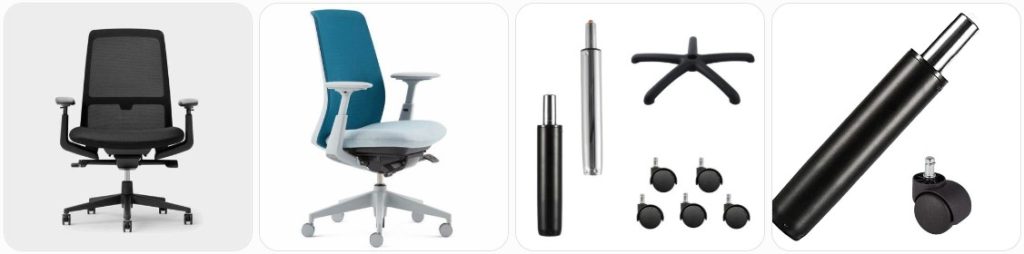
Haworth Soji parts can be a little tricky because some small items are sold online, while model-specific parts may need to come from Haworth, a dealer, or a donor chair. Start with the parts below and compare your chair’s exact options before ordering.
Replacement arm caps are one of the easiest Soji parts to refresh, especially if the top pads are scratched, shiny, cracked, or loose. Match the style to your Soji arm type before buying. » find on amazon / find on ebay
Casters are worth replacing if the chair drags, squeaks, scratches floors, or rolls too freely. Look for the correct stem size and choose hard-floor or carpet casters based on your workspace. » find on amazon / find on ebay
Replace the pneumatic cylinder if your Soji slowly sinks, will not raise, or feels stuck at one height. Check the overall height range and taper fit before ordering a universal cylinder. » find on amazon / find on ebay
A replacement base may be needed if a leg is cracked, bent, or no longer holds the cylinder tightly. Match the Soji base style, finish, cylinder socket, and caster compatibility. » find on amazon / find on ebay
If the height button, pivot, width slide, or arm post is broken, you may need the full arm assembly instead of just the cap. Confirm left/right side and 4D arm configuration. » find on amazon / find on ebay
The optional lumbar support can be damaged if the handles, slider, or pad are forced. Search carefully because lumbar parts are often model-specific and may be easier to source through Haworth. » find on amazon / find on ebay
A worn seat cushion can feel flat, uneven, or loose on the seat-depth track. Check your chair’s fabric, color, seat-depth option, and mounting points before buying a used replacement. » find on amazon / find on ebay
If the mesh is torn, frame is cracked, or back support feels unstable, search for a complete Soji backrest assembly. Color, frame finish, and lumbar option matter a lot here. » find on amazon / find on ebay
The under-seat mechanism controls recline, tension, lock, seat-depth movement, and sometimes forward tilt. Buy this only after confirming the exact Soji configuration because several control options can look similar. » find on amazon / find on ebay
If the seat-height lever moves but the chair does not rise or lower, inspect both the lever and cylinder. The lever may be part of the mechanism, so verify before ordering separately. » find on amazon / find on ebay
Soji models with optional seat-depth adjustment use a sliding seat pan. If it jams, clicks, or refuses to lock, inspect the track, lever, latch, and mounting hardware first. » find on amazon / find on ebay
The Soji tension crank controls recline resistance. If it is stripped, missing, or stuck, do not force it; search for a matching crank or contact Haworth for the correct service part. » find on amazon / find on ebay
If the back lock will not hold upright or the forward tilt lever feels loose, your chair may need linkage, lever, or mechanism work. Confirm whether your Soji actually has forward tilt. » find on amazon / find on ebay
Missing arm-cap screws, loose seat hardware, and stripped fasteners are common on used chairs. Match the original thread, head type, length, and finish before using generic hardware. » find on amazon / find on ebay
For hard-to-find parts like the back frame, seat pan, arms, or mechanism, a damaged donor Soji can be cheaper than buying each part individually. Compare the chair options first. » find on amazon / find on ebay
Buy Haworth Soji Parts From a Local Authorized Dealer or Repairman Near You
If you cannot find the exact Soji part online, the safest route is to contact Haworth or a local authorized dealer. Use the official Haworth dealer locator to find nearby help, especially for internal mechanisms, lumbar parts, seat assemblies, back frames, and warranty-related service. You can also use the official Haworth contact page or Haworth product support page. Before calling, take photos of the chair, the damaged part, the underside label, and the exact control levers.
Tips for Ordering Haworth Soji Replacement Parts
- Confirm your Soji configuration first: Soji can have different options, including fixed or adjustable arms, optional seat-depth adjustment, optional lumbar support, optional forward tilt, and different finishes.
- Check whether you need a small part or a full assembly: A damaged arm cap may be simple, but a broken arm post, seat-depth track, or tilt lever may require a larger assembly.
- Match left and right parts carefully: Arm assemblies, levers, brackets, and certain plastic trim pieces may not be interchangeable from one side to the other.
- Compare the chair’s finish and color: Soji parts may come in black, fog, metallic, or other finish combinations, so check the frame, base, back, and arm color before buying used parts.
- Use the chair label when contacting Haworth: The label under the seat can help Haworth or a dealer identify the original build, options, date, and replacement compatibility.
- Do not assume every universal part fits: Generic cylinders and casters can work in some cases, but the wrong taper, stem, height, or wheel type can make the chair unstable or uncomfortable.
- Ask whether the part affects warranty coverage: If your Soji is still under warranty, contact Haworth before replacing internal parts yourself.
- Look for genuine parts when possible: Genuine Haworth parts are usually the best option for arm caps, caster kits, control parts, lumbar parts, and mechanism-related repairs.
- Be careful with used donor parts: Used Soji parts can save money, but avoid parts from chairs with cracked frames, bent bases, broken control levers, or heavy commercial wear.
- Keep the old part until the repair is finished: The original part helps you compare screw size, mounting shape, color, lever position, and part orientation.
Tools Needed to Repair Haworth Soji
- Torx screwdriver set: Useful for removing and installing arm caps, trim pieces, and certain chair fasteners without stripping the screw head.
- Metric Allen wrench set: Helpful for seat, arm, and mechanism fasteners if your Soji repair uses hex-head bolts.
- Rubber mallet: Helps loosen a stuck caster, base, or cylinder without damaging the finish as easily as a metal hammer.
- Office chair cylinder removal tool: Makes it easier to separate a stuck gas lift from the mechanism or base when replacing a sinking cylinder.
- Pipe wrench: Can help twist out a seized cylinder, but protect nearby plastic and painted parts before using it.
- Needle-nose pliers: Useful for pulling small clips, handling washers, and positioning hardware in tight areas under the seat.
- Measuring tape: Helps confirm seat height, cylinder length, caster stem size, arm height, and other measurements before ordering replacements.
- Magnetic parts tray: Keeps Soji screws, washers, and small hardware from disappearing during arm-cap, caster, or seat work.
- Medium-strength threadlocker: Can help keep certain bolts from loosening again, but use only where appropriate and avoid permanent threadlocker.
- Work gloves: Protects your hands when flipping the chair, pulling casters, handling the base, or removing a stuck cylinder.
Haworth Soji Diagram & Manual
For official Soji adjustment information, start with the Haworth Assembly & User Guides page, which includes the Soji Office Chair adjustment resource. You can also review the official Haworth Soji User Guide PDF. The guide explains seat height, tilt tension, optional seat depth, optional lumbar, back lock, optional forward tilt, and arm adjustments. For product dimensions, features, and current chair configuration details, use the official Haworth Soji product page. For actual replacement diagrams or internal part numbers, contact Haworth or an authorized dealer because many service parts are not shown on public retail pages.
How to Prevent Damage to Haworth Soji Parts
- Do not force the tilt tension crank: Once the Soji tension crank reaches its limit, forcing it farther can damage the control or make the crank feel stripped.
- Use the correct casters for your floor: Hard-floor casters on carpet or carpet casters on hard floors can cause poor rolling, floor marks, and extra stress on the base.
- Adjust the armrests gently: Do not yank the 4D arm caps sideways or use the armrests to pull the whole chair across the room.
- Keep the seat-depth track clean: Dust, crumbs, and debris can make the optional sliding seat pan feel jammed or uneven.
- Avoid leaning heavily on one arm: Putting your full body weight on one Soji armrest can loosen the post, cap, or internal arm mechanism over time.
- Do not sit on the front edge of the seat: Repeated pressure on the waterfall edge can wear the cushion and stress the seat pan.
- Clean the mesh and fabric carefully: Use gentle cleaning instead of harsh scrubbing, bleach, or soaking the seat and back materials.
- Check loose screws early: If an arm cap, seat, or control area starts rattling, tighten the correct fastener before the hole or bracket wears out.
- Flip the chair carefully during repairs: Place it on a towel, rug, or cardboard so the back frame, armrests, and adjustment levers do not get scratched.
- Stay within the chair’s intended use: Avoid standing on the Soji, rocking aggressively, dropping into the seat, or using it as a step stool.
Haworth Soji Parts FAQ
Where can I buy Haworth Soji replacement parts?
You can search Amazon and eBay for common parts like arm caps, casters, cylinders, and used donor parts. For model-specific parts such as the seat pan, backrest, lumbar support, arm assemblies, or tilt mechanism, contact Haworth or a local authorized Haworth dealer.
Are Haworth Soji arm caps replaceable?
Yes, Soji arm caps are replaceable. They are usually one of the easier repairs because the old cap can be removed and the new cap can be secured with the proper screw. Always match the correct arm style before ordering.
Can I replace Haworth Soji casters myself?
Yes, casters are usually a simple DIY repair. Flip the chair carefully, pull the old casters out, and push the new ones into the base. Make sure the replacement casters match the stem type and floor surface.
Why does my Haworth Soji keep sinking?
A Soji that slowly sinks usually has a failing gas lift cylinder. In most cases, replacing the cylinder fixes the problem, but you should confirm the correct height, taper, and compatibility before buying a replacement.
Can I use a universal gas cylinder on a Haworth Soji?
Sometimes a universal office chair cylinder may fit, but it is not guaranteed. The wrong cylinder can change the seat height or fit poorly in the base or mechanism. A genuine or verified compatible cylinder is safer.
How do I know which Soji parts fit my chair?
Check the label under the seat, take photos of the damaged part, and compare your chair options such as arms, lumbar, seat depth, forward tilt, base finish, and caster type. When unsure, send those details to Haworth support or a dealer.
Can I replace the Haworth Soji seat cushion?
Yes, but finding the correct seat cushion or seat pan can be harder than finding casters or arm caps. You need to match the fabric, color, mounting points, and seat-depth configuration.
Can I replace the Haworth Soji mesh back?
The backrest may be replaceable, but it is usually a model-specific part. If the mesh, frame, or lumbar area is damaged, contact Haworth or a dealer before buying used parts online.
What should I do if my Soji seat depth adjustment is stuck?
First check for debris in the sliding track and make sure the lever is moving correctly. Do not force the seat pan. If the latch, track, or lever is damaged, you may need dealer help or a replacement seat assembly.
Why is my Haworth Soji armrest loose?
A loose armrest may be caused by a worn arm cap, loose screw, damaged arm post, or broken internal adjustment mechanism. Tighten visible fasteners first, then inspect whether the cap or full arm assembly needs replacement.
Can I add lumbar support to a Haworth Soji that does not have it?
It may be possible on some versions, but it depends on the back frame and available service parts. Contact Haworth or a dealer with your chair label and photos before buying a used lumbar support kit.
Does replacing Soji parts void the warranty?
It can depend on the part, warranty status, and who performs the repair. If the chair may still be under warranty, contact Haworth first before replacing internal parts, mechanisms, seat assemblies, or structural components.
Is it better to buy a donor Haworth Soji chair?
A donor chair can be useful when you need hard-to-find parts like a backrest, seat pan, arms, or mechanism. Just make sure the donor chair has the same options and that the part you need is not also worn or broken.
What are the easiest Haworth Soji parts to replace?
The easiest Soji parts to replace are usually arm caps and casters. Cylinder replacement is also common, but it can require more effort because the old cylinder may be stuck in the base or mechanism.
Should I repair or replace my Haworth Soji?
Repair makes sense if the issue is a caster, arm cap, cylinder, loose hardware, or one replaceable part. Replacement may be better if the frame, mechanism, backrest, seat pan, and arms are all heavily worn.
Summary
Haworth Soji parts are easiest to handle when you separate simple wear parts from model-specific service parts. Arm caps, casters, and sometimes cylinders are usually the first parts to search for online. For the seat, back, lumbar, arms, levers, and mechanism, use the chair label and contact Haworth or a dealer. A little checking before ordering can save you from buying the wrong part.

HYEJDRV Heavy Duty 500LBs Office Chair Tilt Control Mechanism Replacement Parts, Office Chair Swivel Tilt Base W/6" x 10.2" Mounting Holes - Black

Omyoffice 5.5” Office Chair Gas Lift Cylinder Replacement, Class 4 Piston | Heavy-Duty 1000 lbs, Hydraulic Pneumatic Gas Lift, Universal Fit Most Executive Gaming Desk Chairs, Black
