
Buying a used Steelcase Leap is a popular way to get a premium ergonomic chair without paying the full new price. Still, age, generation, upholstery, adjustments, and refurbishment quality can vary considerably. This guide explains where to shop, what prices to expect, and exactly what to inspect before paying.
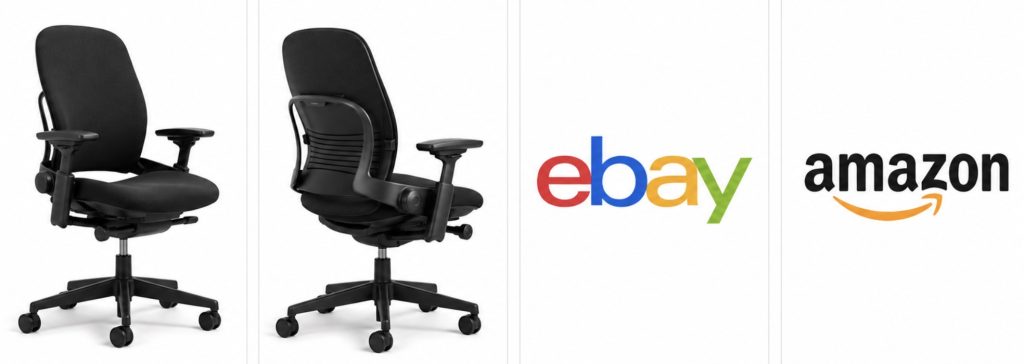
Is a Used/Refurbished Steelcase Leap Worth Buying?
A used or refurbished Steelcase Leap can be an excellent value because it combines durable commercial-office construction with a wide range of ergonomic adjustments. It is also widely available on the secondhand market because businesses frequently sell batches of Leap chairs when they relocate, remodel offices, or replace their furniture.
The Leap is particularly well suited to secondhand buying because many of its most important features can be tested before purchase. You can check the seat-depth adjustment, recline tension, back-stop positions, lower-back firmness control, adjustable lumbar support, pneumatic seat height, and armrest movement without dismantling the chair.
Steelcase designed the Leap around its flexible LiveBack system, which allows the backrest to change shape as the user moves. The chair also uses a seat and recline design that helps the user remain closer to the desk while leaning backward. These model-specific features are important because they distinguish the Leap from basic office chairs that only provide height adjustment and a simple rocking mechanism.
A properly functioning used Leap can still provide excellent support after years of service. However, the chair’s age, previous usage, storage conditions, maintenance, and refurbishment quality all affect its remaining value.
Most used listings involve one of two generations:
- Steelcase Leap V1: The original generation, generally recognizable by its older frame, backrest, and armrest design. It is usually less expensive than the V2 and can still be comfortable, but replacement parts and certain upgrades may be less readily available.
- Steelcase Leap V2: The newer and more commonly requested generation. It has a slimmer, taller-looking backrest, updated armrests, a more modern profile, and broad availability in the used and refurbished market.
A Leap V1 should not automatically be considered inferior, but buyers should not pay Leap V2 pricing for one unless its condition, configuration, or refurbishment justifies it. Always confirm the generation before comparing listings.
The strongest reason to buy used is price. A locally sourced Leap V2 may cost only a fraction of a new model. A refurbished Leap can cost more, but it may include new upholstery, replacement arm pads, upgraded foam, a replacement cylinder, new casters, professional cleaning, and seller-backed warranty coverage.
A used or refurbished Steelcase Leap is generally worth buying when:
- The chair is confirmed as a genuine Leap V1 or V2.
- The manufacturing label is present and readable.
- The frame, seat shell, backrest, and base have no structural cracks.
- The seat-depth adjustment moves and locks correctly.
- The recline tension and back-stop controls operate normally.
- The lower-back firmness adjustment creates a noticeable change.
- The gas cylinder maintains the selected height.
- The seat and back padding remain comfortable.
- The armrests hold their positions.
- The total cost is meaningfully below buying new.
A secondhand Leap may not be worthwhile when the chair has severe seat compression, broken recline controls, structural damage, missing model-specific parts, an incorrectly installed cylinder, or poorly fitted upholstery. Repairs can quickly remove the savings.
The Leap is also highly adjustable, but adjustability does not guarantee that every person will find it comfortable. Some users prefer thicker seat padding, a firmer backrest, a different seat shape, or a chair with a headrest. When possible, sit in a Leap for at least 15 to 30 minutes before purchasing locally.
A refurbished Leap may be the safer online option because reputable refurbishers normally test the chair, disclose replacement parts, provide assembly instructions, package it professionally, and offer returns or warranty coverage. The quality of refurbishment varies, however, so the seller’s process matters more than the word “refurbished.”
Used vs Refurbished Steelcase Leap: What Is the Difference?
A used Steelcase Leap is generally sold in its existing condition. It may have been removed from a corporate office, purchased from a furniture liquidator, traded by a private owner, or resold by a dealer without extensive restoration.
The seller may clean the chair and verify its basic functions, but a used listing does not necessarily mean the chair has been disassembled, inspected, repaired, lubricated, or fitted with replacement components.
A used Leap may have:
- Scratches or scuffs on the frame and base
- Faded, stained, or worn upholstery
- Compressed seat or back foam
- Cracked or hardened arm pads
- Loose or worn armrest mechanisms
- Noisy recline components
- Hair, dust, or debris around the casters
- A weak or sinking gas cylinder
- Missing adjustable lumbar support
- Normal wear from years of office use
A refurbished Steelcase Leap should have received more extensive cleaning, testing, adjustment, repair, or replacement work. Depending on the seller, refurbishment may include:
- Disassembling and inspecting the chair
- Deep-cleaning or steam-cleaning the upholstery
- Removing and replacing the original fabric
- Adding supplemental seat foam
- Installing an entirely new seat pad
- Replacing worn arm pads
- Installing a new gas cylinder
- Replacing the casters
- Testing the recline and back-stop mechanism
- Testing the seat-depth adjustment
- Lubricating approved moving components
- Replacing damaged or missing hardware
- Touching up superficial frame damage
- Providing a seller-backed warranty
Some sellers use the term “remanufactured” for chairs that receive a more extensive rebuilding process. A remanufactured Leap may include replacement upholstery, new seat foam, a new cylinder, new casters, and new arm pads. However, there is no universal marketplace definition that guarantees a specific restoration standard.
Ask the seller to provide a written refurbishment checklist. Important questions include:
- Was the original upholstery cleaned or replaced?
- Was the original foam retained, supplemented, or replaced?
- Are the replacement parts genuine Steelcase or aftermarket?
- Was the gas cylinder replaced?
- Were both arm pads replaced?
- Were the casters replaced?
- Were all adjustment controls tested?
- Was the chair disassembled during inspection?
- What warranty covers the replacement parts?
- Who pays shipping for a warranty claim?
A high-quality used chair can be a better purchase than a poorly refurbished one. New fabric may make a chair look impressive, but cosmetic work does not prove that the recline mechanism, cylinder, arms, seat slider, and back controls were tested.
An open-box Leap is another category. It may be a recent customer return, display chair, canceled order, damaged-box product, or older chair placed in replacement packaging. Verify the manufacturing date because an old Leap should not be valued as a recent open-box return merely because it looks clean.
How Much Does a Used or Refurbished Steelcase Leap Cost?
Used and refurbished Steelcase Leap prices vary significantly because sellers offer different generations, manufacturing years, arm configurations, frame finishes, upholstery materials, refurbishment processes, warranties, and shipping arrangements.
A practical U.S. price guide is:
- $75–$175: Common for an older Leap V1, a heavily used Leap V2, an as-is liquidation chair, or a local chair with visible cosmetic wear. Test every function and expect possible cleaning or replacement-part costs.
- $175–$300: A typical range for a functional used Leap V2 purchased locally from a private seller, office-furniture dealer, or liquidator. Upholstery and frame wear may be visible, and warranty coverage is usually limited or nonexistent.
- $300–$450: Often represents a cleaner Leap V2, a dealer-inspected chair, a shipped used chair, or a basic refurbished model with limited replacement work and a short return period.
- $450–$650: Common for a comprehensively refurbished Leap V2 with replacement upholstery, upgraded padding, new arm pads, a replacement cylinder, new casters, professional cleaning, and seller-backed warranty coverage.
- $650–$850: May apply to premium remanufactured Leap V2 chairs, unusual frame finishes, leather upholstery, substantial foam upgrades, extended warranty coverage, or chairs sold with free nationwide shipping.
- More than $850: Compare the chair closely with current new pricing. The refurbishment, upholstery, frame condition, return policy, and warranty should be exceptional at this level.
Leap V1 chairs generally cost less than Leap V2 chairs because they are older and usually have lower demand. However, an exceptionally clean or professionally refurbished V1 may cost more than a heavily worn V2.
Certain options can increase the price:
- Polished or aluminum frame and base
- Leather upholstery
- Leap stool configuration
- New commercial-grade upholstery
- Thicker replacement seat foam
- Recently manufactured chair
- Complete four-way adjustable arms
- Included adjustable lumbar support
- New cylinder and casters
- Long seller-backed warranty
- Free shipping and free returns
Factors that should reduce the price include:
- Older Leap V1 generation
- Unknown manufacturing date
- Missing label
- Missing lumbar support
- Fixed or limited-adjustment arms
- Cracked arm pads
- Worn upholstery
- Compressed seat foam
- Sinking cylinder
- Broken back-stop positions
- Damaged seat-depth adjustment
- Excessive arm or seat wobble
- No return policy
- Buyer-paid return shipping
Shipping can substantially affect the final value. The Leap is a heavy commercial chair, and proper packaging is expensive. Some sellers include shipping in the advertised price, while others charge a significant additional fee.
A $225 local Leap V2 that you can test may provide better value than a $325 chair with limited seller information. Conversely, a $600 remanufactured chair with new wear components, free delivery, free returns, and a long warranty may be safer than a cheaper unknown chair purchased sight unseen.
Before buying, compare the listing with a Steelcase Leap office-chair search on Amazon. You should also price likely replacement parts, including Steelcase Leap V2 replacement arm pads, Steelcase Leap V2 gas cylinders, and Steelcase Leap replacement casters.
Calculate the total cost using:
- Chair price
- Shipping
- Sales tax
- Replacement upholstery
- Foam upgrade
- Arm-pad replacement
- Cylinder replacement
- Caster replacement
- Missing lumbar component
- Cleaning supplies
- Possible return freight
A low advertised price does not automatically make the chair inexpensive. A worn $150 Leap that requires upholstery, arm pads, a cylinder, wheels, and extensive cleaning may cost more than a ready-to-use $350 chair.
Where to Buy a Used or Refurbished Steelcase Leap Online
eBay is one of the largest online sources for used, refurbished, remanufactured, open-box, and replacement-part Steelcase Leap listings. It includes inventory from private owners, office-furniture liquidators, professional refurbishers, used-furniture dealers, and high-volume resellers.
Use several search phrases instead of relying on one:
- Steelcase Leap
- Steelcase Leap V1
- Steelcase Leap V2
- Used Steelcase Leap V2
- Refurbished Steelcase Leap V2
- Remanufactured Steelcase Leap
- Steelcase 462 chair
- Steelcase Leap fully loaded
- Steelcase Leap aluminum frame
- Steelcase Leap office liquidation
Search results can contain complete chairs, replacement parts, miniature models, covers, headrests, wheels, cylinders, and arm pads. Read the title and description carefully to make sure the listing is for the complete chair.
Confirm whether the chair is a Leap V1 or V2. Some sellers use “Leap” and “Leap V2” interchangeably, while others may not know the difference. Ask for current photographs of the front, back, side, controls, armrests, underside, and manufacturing label.
The phrase “fully loaded” is common in eBay listings, but it does not have a reliable universal definition. One seller may use it for a Leap with four-way arms and adjustable lumbar support, while another may apply it to almost any chair with standard controls.
Ask the seller to confirm whether the chair includes:
- Seat-height adjustment
- Seat-depth adjustment
- Recline-tension adjustment
- Multiple back-stop positions
- Lower-back firmness control
- Adjustable lumbar support
- Four-way adjustable arms
- Standard or stool-height cylinder
Examine the condition category carefully. An eBay chair may be listed as used, seller refurbished, certified refurbished, open box, or new. The selected category does not explain exactly what was replaced or repaired.
A trustworthy refurbished listing should explain:
- Whether the upholstery is original or replaced
- Whether the foam was replaced or supplemented
- Whether the cylinder is new
- Whether the arm pads are new
- Whether the casters are new
- Whether the chair was disassembled and inspected
- Whether every adjustment was function-tested
- Whether cosmetic scratches remain
- What warranty is included
Look closely at the photographs. Some high-volume sellers use representative photos because they have multiple similar Leap chairs. Ask whether the displayed chair is the exact unit you will receive.
When representative photos are used, ask the seller:
- What cosmetic grade will be shipped?
- What range of manufacturing dates is included?
- Will the upholstery color match exactly?
- Are frame scratches permitted under the grading standard?
- Is the lumbar component guaranteed to be included?
- Will both arms have the same adjustment type?
- Are replacement parts consistent across the inventory?
Review the seller’s recent feedback. Pay particular attention to comments about:
- Accuracy of the chair description
- Upholstery quality
- Seat-padding condition
- Frame cleanliness
- Armrest condition
- Packaging quality
- Shipping damage
- Missing parts
- Return handling
- Warranty support
Confirm how the chair will be packaged. A Leap may arrive partially assembled, with the cylinder, base, casters, seat, or back separated. Improper disassembly can damage the cylinder activation system, seat mechanism, frame, or upholstery.
Ask whether tools and assembly instructions are included. Professional sellers may provide a printed guide or video showing how to assemble the exact generation and cylinder type.
Read the return policy before ordering. Important details include:
- Number of return days
- Whether the trial period begins at delivery
- Who pays return freight
- Whether free returns apply to comfort concerns
- Whether customized upholstery is returnable
- Whether a restocking fee applies
- Whether original packaging is required
- Whether assembly affects eligibility
Keep all communication and payments within eBay. Avoid sellers who request direct payments, wire transfers, gift cards, cryptocurrency, or off-platform deposits.
Other Online Websites/Marketplace for Used/Refurbished Steelcase Leap
- Crandall Office Furniture: Crandall sells remanufactured Steelcase Leap V2 chairs with selectable upholstery and frame options. Its restoration process may include replacement seat and back upholstery, upgraded padding, new arm pads, new casters, a replacement cylinder, inspection, and seller-backed warranty coverage. Review the exact configuration, return terms, and included upgrades before ordering.
- BTOD: BTOD offers refurbished Leap V2 chairs with new upholstery and replacement wear components. Depending on the selected configuration, buyers may be able to choose between an original-style seat feel and additional foam. Check current pricing, warranty coverage, trial terms, return shipping, and refurbishment details.
- Facebook Marketplace: Facebook Marketplace is one of the best sources for lower-priced local Leap V1 and V2 chairs. Search for “Steelcase Leap,” “Leap V2,” “Steelcase office chair,” “office liquidation,” and “ergonomic office chair.” Local pickup allows you to test every adjustment and verify the label before paying.
- Craigslist and OfferUp: These platforms often have Leap chairs from private owners, office closures, furniture dealers, and liquidators. Sellers may not identify the generation correctly, so inspect the chair rather than trusting the title. Avoid deposits, meet safely, and test it thoroughly before payment.
- Online Office-Furniture Liquidators: Regional liquidators frequently list used Leap chairs on their websites and may offer local pickup, delivery, quantity discounts, or limited warranties. Ask whether you can choose the exact chair, inspect it in a showroom, or receive current photographs before ordering.
Used or Refurbished Steelcase Leap: Buying Tips & What to Avoid
- Confirm whether it is a Leap V1 or Leap V2: The two generations should not be priced as though they are identical. Request clear photographs of the chair and label, then compare the design with confirmed V1 and V2 examples.
- Request the manufacturing label: Look underneath the seat for the Steelcase label. It may show model, order, manufacturing, and date information. Ask for a sharp, readable photograph rather than accepting the seller’s typed description.
- Check for the Steelcase name and model family: Leap chairs are commonly associated with Steelcase’s 462 model family. Compare the label, frame shape, controls, backrest, seat, and arms with genuine examples.
- Verify the manufacturing date: Age does not automatically make a Leap undesirable, but it affects value and likely wear. A seller describing a chair as nearly new or open box should be willing to show its date label.
- Ask whether the label was removed during refurbishment: Some refurbishers remove, cover, or damage labels while replacing fabric. Ask for documentation explaining the chair’s generation and estimated manufacturing period when the original label is unavailable.
- Confirm the exact arm configuration: Leap chairs may have different armrest options. Four-way arms generally adjust in height, width, depth, and pivot. Test or request a demonstration of every movement.
- Test armrest height adjustment: Raise and lower both arms. They should hold the selected height instead of slipping downward under light pressure.
- Test armrest width adjustment: Confirm that both arm assemblies can move inward or outward as intended and remain secure after adjustment.
- Test arm-cap depth and pivot: Slide and pivot each arm pad. The movements should feel controlled rather than excessively loose or completely seized.
- Check for excessive arm wobble: Some movement is normal in multi-adjustable arms, but severe looseness can be distracting. Determine whether the movement comes from the cap, vertical post, width mechanism, or frame attachment.
- Inspect the arm pads: Look for splits, peeling, deep indentations, hardening, sticky surfaces, or exposed material. Replacement pads are available, but include their cost when negotiating.
- Test the pneumatic height adjustment: Move the seat through its full height range several times. The lever should operate smoothly, and the chair should not jerk or stick.
- Test for cylinder sinking: Raise the chair to maximum height and remain seated for several minutes. Repeat at a middle height. Any gradual downward movement suggests cylinder wear.
- Identify the cylinder activation style: Different Leap manufacturing periods may use different cylinder designs. Confirm the chair’s date and activation type before ordering a replacement cylinder.
- Inspect the cylinder installation: Look for excessive scratches, tool marks, dents, oil residue, rust, or incorrect seating in the base and mechanism. These may indicate rough previous removal or improper replacement.
- Test the seat-depth adjustment: Slide the seat forward and backward through its range. It should move smoothly and remain securely in the selected position.
- Avoid a seat slider that will not lock: A seat that moves unexpectedly while sitting may have a worn, broken, or incorrectly assembled depth mechanism.
- Inspect the flexible front seat edge: The Leap seat has a flexible front edge designed to reduce pressure. Check for cracks, permanent deformation, loose upholstery, or an edge that feels damaged rather than flexible.
- Sit in the chair for at least 15 minutes: Older Leap foam may initially feel acceptable but become uncomfortable after sustained pressure. Check for bottoming out, hard spots, uneven support, and pressure beneath the thighs.
- Inspect the seat foam from the side: A low side profile may reveal compression that is difficult to identify from above. Compare the left and right sides for uneven wear.
- Ask whether the original seat foam was retained: Refurbishers may retain the original foam, add supplemental foam, bond a new layer on top, or replace the complete pad. Ask for the exact method and foam thickness.
- Be cautious with excessively thick foam: Extra padding may feel comfortable, but a major increase can change the relationship between the seat, backrest, lumbar support, and arm height.
- Inspect the backrest padding: Feel for thin areas, lumps, uneven foam, wrinkles, or loose fabric. Replacement upholstery should be fitted smoothly and securely.
- Test the LiveBack movement: Recline and shift your posture. The backrest should flex naturally without cracking, binding, separating, or feeling structurally unstable.
- Test the lower-back firmness control: Turn the control through its adjustment range and recline after each change. You should feel a noticeable difference in lower-back resistance.
- Avoid a firmness knob that spins freely: A knob that turns without changing support may indicate an internal failure, disconnected control, or damaged mechanism.
- Inspect the adjustable lumbar component: When included, it should move vertically and remain where positioned. Check for cracks, missing sections, incorrect installation, or severe looseness.
- Ask whether the lumbar support was removed intentionally: Some users prefer the chair without the separate lumbar component. A missing piece is not necessarily damage, but the listing and price should accurately reflect its absence.
- Test the recline-tension adjustment: Turn the tension control and recline after each adjustment. The resistance should become noticeably lighter or stronger.
- Test every back-stop position: Move the selector through all available positions. Recline in each setting and confirm that the backrest stops at the expected angle.
- Avoid a back stop that slips: A chair that reclines past the selected stop may have a worn or damaged control mechanism.
- Listen during recline: Mild sound can occur between moving components, but loud grinding, snapping, scraping, or repeated cracking should be investigated.
- Check whether the seat glides during recline: The Leap’s seat and back are designed to coordinate during movement. Look for sticking, sudden jumps, severe resistance, or asymmetric motion.
- Check for excessive seat wobble: Hold the base steady and move the seat gently from side to side. Severe movement may come from the cylinder, seat mechanism, or central connection.
- Inspect the seat shell: Look underneath for cracks, missing fasteners, deformation, repaired plastic, and damage around the seat-depth mechanism.
- Inspect the backrest shell: Check the rear and lower mounting area for cracks, stress whitening, glue, filler, drilled reinforcement, or improvised repairs.
- Inspect the frame: Look for bending, cracks, severe impact damage, deep gouges, or repainting that could conceal repairs.
- Inspect the five-star base: Check every leg, caster socket, and the central cylinder opening. Avoid cracked, welded, glued, or heavily damaged bases.
- Test all casters: Roll the chair forward, backward, sideways, and in circles. Every caster should rotate and swivel freely without scraping, locking, or falling out.
- Check for hair and debris around the wheels: A large buildup can restrict movement. Cleaning may solve minor problems, but flat spots, cracked wheels, and damaged stems require replacement.
- Measure caster stems before replacement: Do not assume every wheel will fit. Confirm compatibility before purchasing rollerblade-style wheels for a Steelcase Leap.
- Inspect the upholstery: Look for fading, stains, tears, cigarette burns, pet damage, loose seams, wrinkles, and fabric separating from the seat or back shell.
- Ask whether the fabric is original: Replacement upholstery can be an advantage, but the seller should disclose the material, installer, and whether the old fabric was removed.
- Check upholstery fit around the edges: Poorly fitted material may wrinkle, bunch, loosen, interfere with the seat edge, or detach prematurely.
- Ask about the fabric grade: Commercial upholstery varies in durability, breathability, texture, stain resistance, and cleaning requirements.
- Inspect leather carefully: Leather Leap chairs may have cracks, peeling, dryness, fading, or stretched areas. Confirm whether the material is genuine leather, corrected leather, bonded material, or aftermarket vinyl.
- Ask whether replacement parts are genuine: Arm pads, cylinders, casters, foam, and upholstery may be Steelcase parts or aftermarket alternatives. Good aftermarket parts can work well, but they should be disclosed.
- Ask for a complete refurbishment checklist: Request details of the cleaning, inspection, lubrication, replacement parts, upholstery work, foam work, quality checks, and final testing.
- Ask whether the chair was fully disassembled: Full disassembly can allow a more detailed inspection, but careless work can damage threads, clips, cylinder connections, upholstery, or plastic parts.
- Request a current demonstration video: Ask the seller to demonstrate height adjustment, seat depth, recline tension, back stops, lower-back firmness, lumbar movement, arm adjustments, and caster operation.
- Request timestamped photographs: Ask the seller to place the date or account username beside the chair. This helps confirm that the seller possesses the chair and that the photographs are current.
- Compare all listing photos: Different arm pads, wheels, upholstery marks, labels, or frame scratches may indicate that images from multiple chairs have been mixed together.
- Ask whether the photographed chair is the exact unit: High-volume sellers may ship a similar chair from inventory. Request written grading standards when exact-chair photos are unavailable.
- Ask about previous usage: Find out whether the chair came from a private home, corporate office, call center, showroom, healthcare environment, or storage warehouse.
- Ask how many hours per day it was used: A chair from a high-use office may have more foam, arm, cylinder, and mechanism wear than one used occasionally at home.
- Ask about smoke exposure: Smoke odors can become embedded in the foam and upholstery and may remain after surface cleaning.
- Ask about pets: Inspect for hair, scratches, chewing, stains, and odor around the seat, back, wheels, and underside.
- Ask where it was stored: Damp warehouses, garages, basements, and outdoor areas can cause rust, mildew odor, staining, and deterioration.
- Check for perfume or strong deodorizer: Heavy fragrance may have been applied to conceal smoke, mildew, pet odor, or another contamination problem.
- Review the seller’s warranty carefully: Determine whether it covers the frame, mechanisms, cylinder, armrests, casters, upholstery, foam, and labor.
- Ask who handles warranty service: A refurbished chair’s coverage normally comes from the refurbisher or reseller rather than Steelcase.
- Ask who pays warranty shipping: A long warranty may be less valuable when the buyer must pay expensive freight for every claim.
- Read the return policy: Check the trial period, restocking fee, return-shipping responsibility, original-packaging requirement, and exclusions for custom fabric.
- Keep the original packaging: Do not discard the box, foam, bags, instructions, or hardware packaging until the chair has been fully assembled and tested.
- Photograph the delivery: Take pictures of the sealed box, shipping label, exterior damage, internal packaging, components, and completed chair.
- Avoid stock-photo-only listings: Stock images cannot reveal the actual manufacturing date, upholstery wear, missing lumbar support, frame damage, loose arms, or condition of the controls.
- Avoid misleading open-box claims: A chair manufactured many years ago should not be treated as a recent open-box return without a clear explanation.
- Avoid structural cracks: Do not buy a chair with cracks in the seat shell, backrest shell, frame, base, or arm mounts. Tape, glue, filler, and improvised brackets are not reliable structural repairs.
- Avoid severely compressed foam: New upholstery placed over exhausted foam can make an old chair look better without restoring its support.
- Avoid broken recline controls: Internal Leap mechanisms can be difficult or expensive to repair. A low price may not justify a slipping back stop or ineffective tension control.
- Avoid severe rust: Rust on the cylinder, mechanism, hardware, or frame suggests poor storage and may indicate hidden deterioration.
- Avoid mismatched components: Check that both arms match, all casters are consistent, the upholstery is fitted correctly, and no incompatible parts were installed.
- Avoid paying a premium for appearance alone: Fresh fabric and polished plastic do not prove that the internal controls, foam, cylinder, and arm mechanisms were restored.
- Do not assume the Steelcase warranty transfers: Secondhand warranty eligibility may depend on the original purchaser, authorized dealer, documentation, country, and applicable terms.
- Avoid unprotected payment methods: Keep transactions within the marketplace. Do not send gift cards, cryptocurrency, wire transfers, or direct deposits to unknown sellers.
- Avoid local deposits: A common used Leap is not rare enough to justify sending a reservation payment before inspection. Pay after you have tested the chair.
- Meet safely for local pickup: Use a public or monitored location when possible, inform someone of the meeting, and confirm that the chair fits in your vehicle.
Steelcase Leap Office Chair, Ergonomic Back Support, Onyx | Ergonomic Work Chair with Wheels for Carpet, Supports Unique Body Shape via Natural Glide System & Liveback Technology

Steelcase Leap V2 Office Chair - Remanufactured by Crandall Office - Ergonomic, Fully Adjustable, 12-Year Warranty, Black Fabric - Premium Work & Home Office Seating

Steelcase Leap Office Chair, Ergonomic Back Support, Cobalt | Ergonomic Work Chair with Wheels for Carpet, Supports Unique Body Shape via Natural Glide System & Liveback Technology
Used vs New Steelcase Leap
A used Steelcase Leap is usually the least expensive way to own the chair. Corporate-office liquidations and private sellers can offer substantial discounts, particularly when the chair must be collected locally.
The primary advantages of buying used are:
- Lowest typical purchase price
- Ability to inspect a local chair
- Possibility of receiving it fully assembled
- Large supply of Leap V1 and V2 models
- Access to discontinued colors and frame combinations
The disadvantages include:
- Unknown usage history
- Older foam and upholstery
- Possible cylinder or mechanism wear
- Limited or nonexistent returns
- Uncertain warranty coverage
- Possible missing lumbar support or options
A refurbished Leap normally costs more than an ordinary used chair because the seller performs cleaning, testing, repairs, upholstery work, or component replacement.
The advantages of buying refurbished may include:
- New upholstery
- New or upgraded seat padding
- Replacement arm pads
- Replacement cylinder
- New casters
- Professional inspection
- Nationwide shipping
- Return or trial period
- Seller-backed warranty
The disadvantages include:
- Higher price than a local used chair
- Older original frame and mechanisms
- Possible cosmetic marks
- Aftermarket replacement parts
- Warranty coverage from the refurbisher rather than Steelcase
- Potentially expensive return freight
A new Steelcase Leap offers a known manufacturing history, unused components, current upholstery choices, authorized-sales support, and applicable original warranty coverage.
Buying new also allows the customer to choose available options such as:
- Frame and base finish
- Upholstery material and color
- Arm configuration
- Lumbar support
- Caster type
- Standard or alternative cylinder options
- Headrest where offered
The main disadvantage is cost. The Leap is a premium commercial chair, and upgrades can increase its final price significantly.
Buying used is usually best when:
- You can inspect the chair locally.
- Every adjustment works.
- The seat remains comfortable.
- The label and generation are confirmed.
- The price is substantially lower than new.
- You are comfortable without the original warranty.
Buying refurbished is usually best when:
- You are ordering online.
- You want replacement wear components.
- You need a return or trial period.
- You want seller-backed warranty coverage.
- The refurbishment process is clearly documented.
- The delivered price remains well below new.
Buying new is usually best when:
- You want a specific configuration.
- You need original warranty coverage.
- You want unused foam and upholstery.
- You do not want to investigate previous usage.
- You plan to keep the chair for many years.
- The price difference is acceptable.
Always compare the complete cost. A local $225 Leap V2 in excellent condition may be an outstanding purchase. A $250 chair with $150 shipping, worn padding, damaged arms, and no returns may be worse than a $600 professionally refurbished chair.
Steelcase Leap Used/Refurbished FAQ
Is a used Steelcase Leap worth buying?
Yes. A used Leap can offer excellent value when its frame is sound, the padding remains comfortable, and every adjustment works correctly. Its durable commercial construction and extensive adjustability make it one of the most popular premium chairs on the secondhand market.
Should I buy a Steelcase Leap V1 or V2?
The Leap V2 has a more modern design, updated arms, a taller-looking backrest, and wider availability of refurbished inventory. The V1 can still be comfortable and usually costs less. Choose based on condition, fit, included adjustments, and price rather than generation alone.
How can I identify a Steelcase Leap V2?
Request clear front, rear, side, armrest, control, and underside photographs. Compare the slimmer backrest, updated arm design, frame profile, and manufacturing label with confirmed Leap V2 examples. Do not rely only on the listing title.
Where is the Steelcase Leap manufacturing label?
The label is normally found underneath the seat. It may display Steelcase identification, model, order, and manufacturing information. Request a readable photograph before buying because it can help confirm the chair’s generation and approximate age.
What does the Steelcase 462 model number mean?
The Leap is commonly associated with Steelcase’s 462 model family. Additional characters may describe a particular configuration. Compare the label with the chair’s design and features rather than relying on one number alone.
What is a fair price for a used Steelcase Leap V2?
A functional local Leap V2 often costs approximately $175–$300, while cleaner dealer-inspected or shipped examples may cost $300–$450. Professionally refurbished chairs commonly cost more because they may include new upholstery, foam, arm pads, cylinders, casters, returns, and warranties.
How old is too old for a Steelcase Leap?
There is no strict age limit because condition matters more than the manufacturing year. An older chair used lightly may outperform a newer chair from a high-use office. Inspect the frame, foam, controls, arms, cylinder, and upholstery before deciding.
What does “fully loaded” mean on a Leap listing?
The phrase is not standardized. It may refer to four-way arms, adjustable lumbar support, lower-back firmness, seat-depth adjustment, recline tension, and multiple back-stop positions. Ask the seller to list every included feature.
Does every Steelcase Leap have four-way arms?
No. Arm configurations can vary. Confirm whether the arms adjust in height, width, depth, and pivot. Ask the seller to demonstrate both arms rather than assuming the phrase “adjustable arms” means four-way adjustment.
How much armrest wobble is normal on a Leap V2?
A small amount of movement may occur because the arms adjust in several directions. Severe looseness, collapsing height, uncontrolled sliding, or movement at the frame attachment may indicate worn or damaged components.
Can Steelcase Leap arm pads be replaced?
Yes. Replacement arm pads are available for many Leap configurations. Confirm compatibility with the chair’s generation and arm style. Ask whether the replacements are genuine Steelcase parts or aftermarket products.
Can the Steelcase Leap gas cylinder be replaced?
Yes, but different manufacturing periods may use different activation designs. Confirm the chair’s date and cylinder type before purchasing a replacement. Removing the original cylinder may require special tools or considerable force.
How do I test a used Leap cylinder?
Raise the chair to maximum height and remain seated for several minutes. Repeat at a middle height. The chair should maintain its position, and the adjustment lever should operate smoothly without sticking.
How do I test the Steelcase Leap seat-depth adjustment?
Move the seat forward and backward through its adjustment range, then sit in several positions. The seat should move smoothly and remain securely locked instead of sliding unexpectedly.
What should I check on the Leap recline mechanism?
Test the tension adjustment, every back-stop position, lower-back firmness control, and overall recline movement. Avoid a chair that slips past its stop, grinds loudly, binds, or does not respond to control changes.
Does every Steelcase Leap include adjustable lumbar support?
No. The separate vertically adjustable lumbar component may be optional, removed, or missing. The chair can still be usable without it because the backrest and lower-back firmness control provide support, but the listing should disclose its absence.
Should I replace the seat foam in an older Leap?
Replacement or supplemental foam may help when the original cushion feels compressed, uneven, or creates pressure after extended sitting. Ask about the foam shape and thickness because excessive padding can change the chair’s intended fit.
Is new upholstery enough to make a Leap refurbished?
No. New fabric improves appearance but does not prove that the foam, cylinder, casters, arms, seat slider, recline controls, and frame were inspected. Request a complete refurbishment checklist.
Are aftermarket parts acceptable on a refurbished Leap?
Quality aftermarket arm pads, casters, cylinders, foam, and upholstery can work well, but quality varies. Ask which components are aftermarket, who supplied them, what warranty applies, and whether they change the original fit or operation.
Does a used Steelcase Leap include the original warranty?
Do not assume that it does. Coverage may depend on the original purchaser, authorized sales channel, documentation, country, and warranty terms. A refurbished chair normally includes coverage from the refurbisher rather than Steelcase.
What photographs should I request from the seller?
Request full front, back, side, and underside views, plus close-ups of the label, seat, backrest, upholstery, lumbar support, arms, controls, cylinder, base, wheels, scratches, stains, cracks, and repaired areas.
Should I ask for a video before buying a Leap online?
Yes. Ask for a current video showing the height adjustment, seat depth, recline tension, back stops, lower-back firmness, lumbar movement, all arm adjustments, caster movement, and manufacturing label.
Is local pickup better than shipping a used Steelcase Leap?
Local pickup is often safer because you can sit in the chair, inspect the label, test every adjustment, evaluate the padding, and avoid shipping damage. A reputable refurbisher with strong packaging and returns can still be a good online option.
How should a Steelcase Leap be packaged for shipping?
The chair should be secured against movement, with the base, cylinder, seat, backrest, arms, and controls protected from impact. Removed hardware should be sealed and labeled, and assembly instructions should be included.
What should I do if my refurbished Leap arrives damaged?
Photograph the unopened box, shipping label, damaged packaging, internal protection, missing parts, damaged components, and complete chair immediately. Keep all packaging and contact the seller before attempting repairs.
Can I return a refurbished Leap if it is uncomfortable?
That depends on the seller’s trial and return policy. Check the deadline, return-shipping responsibility, restocking fee, packaging requirements, and exclusions for customized upholstery before purchasing.
Is a refurbished Steelcase Leap as good as a new one?
A high-quality refurbishment can provide excellent comfort and function, particularly when wear components are replaced. However, the frame and internal mechanisms may still be older, and warranty coverage normally comes from the refurbisher rather than Steelcase.
Should I buy a used Leap with a cracked frame or base?
No. Cracks in the seat shell, backrest shell, frame, base, or arm mounts affect structural integrity. Glue, tape, filler, welding, or improvised brackets should not be treated as dependable repairs.
A used or refurbished Steelcase Leap can be a fantastic deal, but the label, generation, foam, arms, cylinder, and recline controls matter far more than a freshly cleaned appearance. Test everything when buying locally, or choose an online refurbisher that clearly explains its replacement parts, warranty, and returns. Compare the complete delivered cost with buying new, and skip chairs with structural cracks, broken controls, misleading open-box claims, or vague refurbishment details. A little extra checking can save you from an expensive restoration project.

HYEJDRV Heavy Duty 500LBs Office Chair Tilt Control Mechanism Replacement Parts, Office Chair Swivel Tilt Base W/6" x 10.2" Mounting Holes - Black

Omyoffice 5.5” Office Chair Gas Lift Cylinder Replacement, Class 4 Piston | Heavy-Duty 1000 lbs, Hydraulic Pneumatic Gas Lift, Universal Fit Most Executive Gaming Desk Chairs, Black
