Buying a chair gas cylinder sounds simple until you realize that not all replacements are truly interchangeable. A lot of office chair owners buy the first “universal” cylinder they see, only to find that the chair sits too high, does not lower enough, feels wrong after installation, or does not match the original height range. In most cases, the problem is not the quality of the new part—it is that the original cylinder was never measured first.
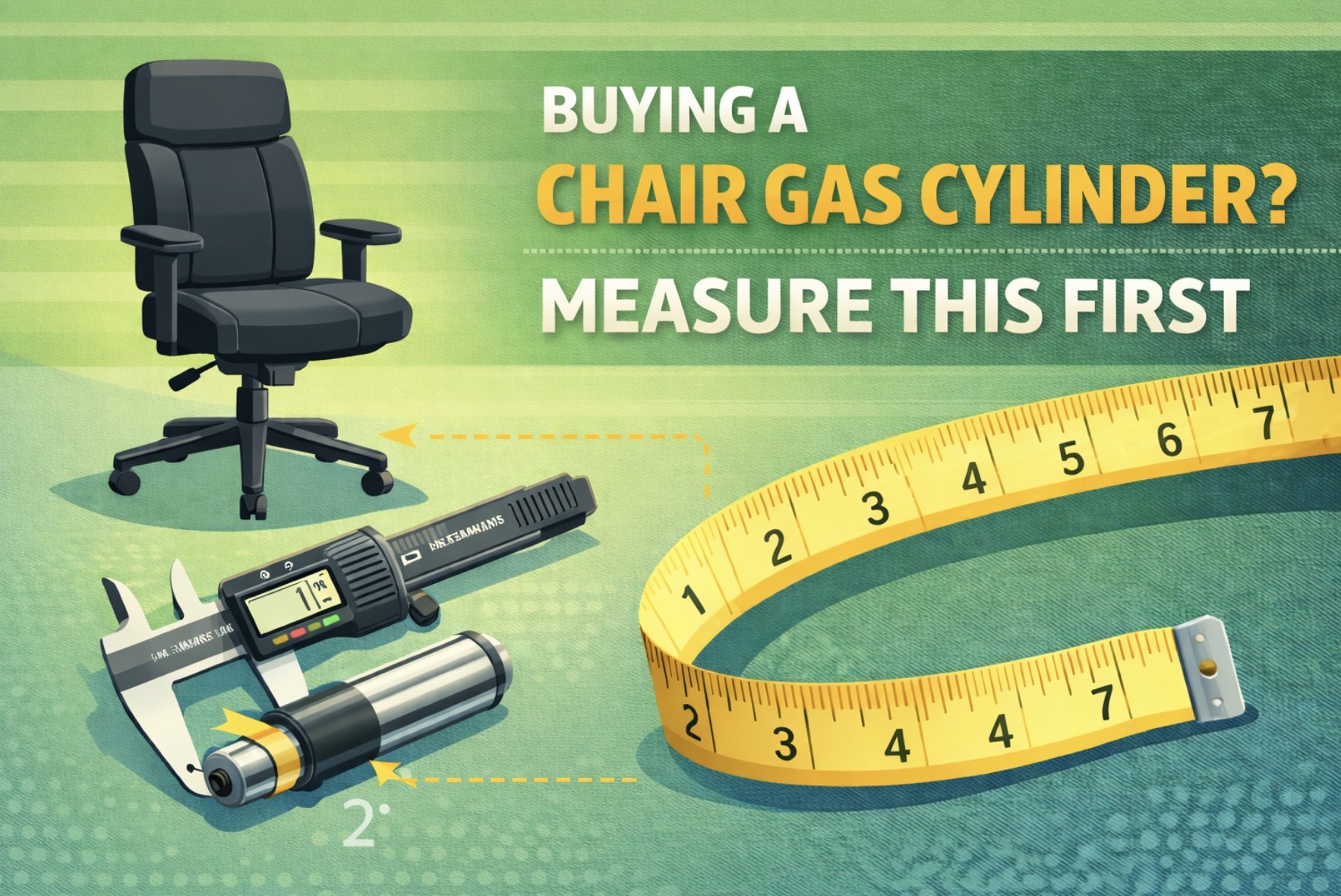
The gas cylinder is the component that controls your chair’s height adjustment. Even though many office chairs use a similar tapered press-fit design, there are still important differences in overall length, compressed height, stroke range, and duty rating. If you want your chair to feel the same after the repair, you need to compare measurements before you order anything.
Before buying, it helps to browse a few office chair gas cylinder replacement options so you can see the specs sellers actually provide. Once you know which measurements matter, choosing the right cylinder becomes much easier.
Why Measuring First Matters
A gas cylinder can look correct in a product photo and still be completely wrong for your chair. Two cylinders may both fit into the base and seat mechanism, but if one is longer, has a different stroke length, or is intended for a different chair type, your sitting height and adjustment range can change immediately.
That can create several annoying problems:
- Your chair may sit too high even at the lowest setting.
- Your chair may not raise high enough for your desk.
- The height adjustment range may feel much shorter than before.
- The replacement may wear out faster if the duty rating is too light for daily use.
If your current cylinder is already failing and slowly sinking during the day, you may also want to read Office Chair Replacement Piston / Gas Cylinder Repair for the actual swap process.
The 4 Things You Need to Measure Before Buying
Most buying mistakes happen because shoppers only compare appearance. What you really need to compare are the dimensions and travel range.
1. Overall Cylinder Length
This is the full end-to-end length of the gas cylinder. It gives you a starting point when comparing products. If the replacement is much longer than the original, the chair may sit taller at every setting. If it is much shorter, the chair may lose usable height.
The most accurate way to get this measurement is to remove the old cylinder completely and measure it on a flat surface. Do not rely on eyeballing the part while it is still installed.
2. Compressed Length
Compressed length is the cylinder’s shortest height when fully lowered. This is one of the most important numbers because it affects the minimum seat height of your chair.
- If the compressed length is too long, the chair will not go low enough.
- If the compressed length is shorter than the original, the chair may sit lower than expected.
This is especially important for shorter users, low desks, and ergonomic setups where flat foot placement matters.
3. Stroke Length
Stroke length is how far the cylinder travels between its lowest and highest positions. In simple terms, it is the height adjustment range.
- A shorter stroke means less adjustability.
- A longer stroke can make the chair raise higher than intended.
- If the listing does not show the stroke length, that is a warning sign.
When shopping, compare multiple Class 4 office chair gas lift cylinders because those listings often include better diagrams and clearer measurements.
4. Cylinder Type and Duty Rating
Not every cylinder is made for the same kind of chair or usage. Some are standard office chair replacements, while others are designed for drafting chairs, stools, or heavy-duty seating.
- Standard cylinders work for many common office chairs.
- Heavy-duty cylinders are better for higher weight capacities and more frequent use.
- Drafting cylinders are taller and meant for elevated seating—not for most standard office chairs.
If you are unsure which category you need, comparing heavy-duty office chair gas cylinders and drafting chair gas cylinders side by side makes the differences a lot easier to spot.

11 Inches-17 Inches Office Chair Gas Lift Cylinder Replacement, Tall Chair Cylinder 5.5" Stroke, Hydraulic Pneumatic Shock Piston, Heavy Duty 1000lbs, Fit for Most Office Chairs, BIFMA/Class 4 (Black)

Omyoffice 5.5 inch Office Chair Gas Lift Cylinder-Office Chair Replacement Parts,Universal Size Fits Most Chairs,Heavy Duty Gas Lift Hydraulic/Pneumatic Piston(Black)

DOZYANT Gas Lift Cylinder Replacement,Hydraulic Pneumatic Shock Piston Heavy Duty (450 lbs) Universal Size Fits Most Executive Office Chairs, Highest End Class 4
How to Measure Your Existing Gas Cylinder Correctly
The best method is to remove the old cylinder and measure it directly. That lets you compare the true dimensions instead of guessing around trim covers and chair parts.
- Flip the chair carefully and remove the base from the cylinder.
- Separate the cylinder from the seat mechanism.
- Measure the full length of the cylinder body.
- Check the compressed height if the cylinder still moves.
- Look for any markings that show class or model information.
- Compare those numbers to product listings, not just product titles.
If the old cylinder is stuck in place, a chair cylinder removal tool or a rubber mallet for chair repair can make removal much easier.
Signs You Are About to Buy the Wrong Cylinder
Some product listings make it easy to choose the right replacement. Others are so vague that they almost guarantee confusion.
- The listing says “universal” but does not show actual measurements.
- The product is labeled mainly for bar stools or drafting chairs.
- The seller does not show compressed length or stroke length.
- Reviews repeatedly mention that the chair sits too high or too low after installation.
- The weight rating seems too light for your chair type or daily use.
A detailed product page is almost always worth choosing over a vague one, even if the price is slightly higher.
Should You Buy a Standard or Heavy-Duty Replacement?
Many shoppers automatically choose the cheapest standard cylinder, but that is not always the best long-term move. If your chair gets heavy daily use, supports a larger user, or came from a big-and-tall category, a stronger cylinder can be a better investment.
A lot of buyers specifically look for Class 4 gas cylinder office chair replacements because they are commonly associated with improved durability and a higher-duty build. That does not mean every chair needs one, but it is often a smart upgrade when you want the repair to last longer.
If your chair also feels unstable while you are diagnosing the cylinder, check Why Your Office Chair Wobbles and How to Fix It Fast so you do not mistake a base issue for a cylinder issue.
DOZYANT Gas Lift Cylinder Replacement,Hydraulic Pneumatic Shock Piston Heavy Duty (450 lbs) Universal Size Fits Most Executive Office Chairs, Highest End Class 4

Office Chair Gas Cylinder, Class 4 Chair Gas Lift, Heavy-Duty 1000lbs Office Chair Cylinder Replacement, 12-18inch Universal Office Chair Gas Lift Cylinder Replacement for Gaming Captain Home Chair

Huiguli Office Chair Cylinder Replacement - Heavy Duty Class 4 Hydraulic Pneumatic Gas Lift Cylinder(12" to 18" Adjustable, 1000 lbs Capacity) - Universal Fit for Most Executive Office Chairs
Other Parts Worth Checking While the Chair Is Apart
Once you remove the cylinder, it is a good time to inspect the rest of the chair. Sometimes a bad gas lift is only one of several wear points.
- Check the base for cracks or flex.
- Inspect the casters for wear or poor rolling.
- Look at the tilt mechanism bolts for looseness.
- Make sure the seat plate is not bent or damaged.
If your chair has more than just a height issue—especially if the recline is acting up too—you may also want to see Office Chair Won’t Recline? 5 Fixes Before You Buy a New One while you are already troubleshooting the chair.
A Quick Buying Checklist Before You Order
Use this checklist before clicking buy:
- Measure the original cylinder’s overall length.
- Confirm the compressed length.
- Check the stroke length.
- Match the replacement to a standard, heavy-duty, or drafting use case.
- Review the duty rating and weight capacity.
- Read reviews for fit and seat height accuracy.
- Prefer listings with diagrams and exact dimensions.
Shopping this way is far safer than trusting a “fits most chairs” headline.
Conclusion
If you are buying a chair gas cylinder, the smartest thing you can do is measure first. Most bad replacement experiences happen because people assume all cylinders are the same size and travel range. They are not.
A few minutes of measuring can save you from ordering the wrong part, returning a bad fit, or ending up with a chair that feels awkward every time you sit down. Once you know your dimensions, you can confidently compare office chair gas lift replacement cylinders that actually match your chair’s original performance.
If you also need help with installation or removal, pair this guide with the repair steps and related troubleshooting articles above so you can get the chair working like new again.

