
Fixing a broken Staples Dexley chair is usually easier than it looks. Many problems come from loose bolts, dirty casters, incorrect control settings, or replaceable parts such as the gas cylinder. This guide walks you through the most common Dexley repairs, likely costs, replacement-part options, warranty help, and simple ways to keep the chair working properly.
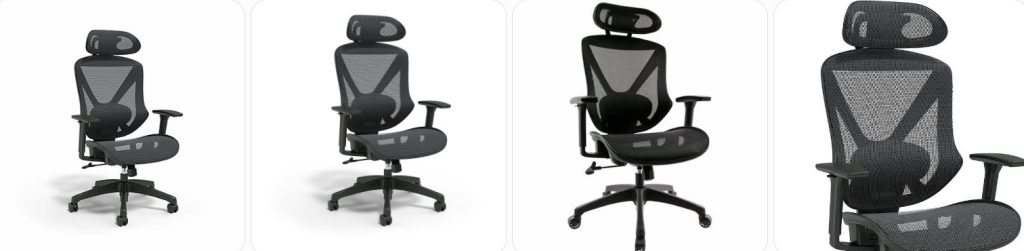
Quick Fix to Common Staples Dexley Problems
Staples Dexley chair keeps sinking: A Dexley that slowly drops while you are sitting usually has a worn gas lift cylinder. Confirm that the height lever is not stuck against the cylinder release button. If the lever is working normally, replace the cylinder with a compatible office chair gas lift cylinder rated for the chair’s size and user weight.
Gas cylinder will not come out: The Dexley cylinder is pressure-fitted into the seat mechanism and five-star base, so there are no screws holding it in place. Apply penetrating lubricant around both joints, allow it to soak, and twist the cylinder with a pipe wrench. A dedicated office chair cylinder removal tool can reduce the risk of damaging the base.
Staples Dexley will not recline: Pull the height-and-tilt control lever outward to unlock the reclining mechanism. If the chair still feels rigid, turn the large tilt-tension knob underneath the seat counterclockwise several complete turns. The Dexley tension adjustment may require more rotation than expected. Inspect the mechanism for packing material, bent components, or an overtightened tension setting.
Dexley recline will not lock: The Dexley uses a tilt-control lever to engage its available locking positions. Sit upright or move the backrest into the desired supported position before pushing the lever inward. Do not force the lever while your full weight is pressing against the backrest. If it moves freely without engaging, the internal tilt mechanism may need warranty replacement.
Chair leans backward too easily: Turn the Dexley tilt-tension knob clockwise while no one is sitting in the chair. Test the recline after every few turns until the resistance feels comfortable. The adjustment changes reclining resistance rather than permanently locking the backrest. Users with different body weights may need substantially different settings.
Chair is extremely difficult to recline: Turn the tension knob counterclockwise several times to reduce resistance. Verify that the tilt lever has been pulled outward and that the backrest is not currently locked. Make adjustments while standing beside the chair instead of placing full body weight against the mechanism. Stop if the knob binds or appears damaged.
Dexley armrest is loose or wobbling: Turn the chair on its side and check the bolts connecting the armrest supports to the underside of the seat. Tighten them evenly with the correct Allen key, but do not overtighten them into the plastic or threaded inserts. If a bolt repeatedly loosens, apply a small amount of removable blue threadlocker to clean threads.
Armrest height button is stuck: Remove dust from around the Dexley armrest button and gently move the arm pad upward while pressing the release. Avoid using oily lubricant where it can stain clothing. A small amount of dry silicone lubricant may help if the sliding track is binding. A cracked button or internal latch normally requires replacement of the armrest assembly.
Dexley headrest keeps dropping: First confirm that the headrest post is fully inserted and facing the correct direction. Tighten any accessible attachment screws evenly. The headrest is designed to move in height and angle, so some movement is normal, but it should remain at the selected setting. Worn friction joints or cracked mounting points may require a replacement headrest.
Headrest feels too loose or bouncy: Reposition the headrest so your head rests near its center instead of pressing against its upper edge. Check the mounting hardware and tighten it carefully. Avoid adding permanent adhesive because doing so can prevent future adjustment and may affect warranty service. Contact product support when the hinge moves even after all accessible hardware is secure.
Lumbar support slides down: Clean the lumbar support guide and check whether the support is properly seated in the Dexley backrest track. Move it slowly using both sides rather than pulling from one corner. If the retaining tabs are worn or cracked, contact Staples product support before attempting glue, drilling, or other permanent modifications.
Lumbar support feels too aggressive: The Dexley lumbar pad mainly adjusts vertically, not forward and backward. Move it slightly lower or higher so it follows your natural lower-back curve. Sitting all the way back may also distribute the pressure more evenly. Do not remove or permanently alter the support while the chair may still qualify for warranty service.
Seat mesh is sagging: Check that the apparent sag is not caused by a loose seat-frame bolt or a cylinder set too low. The Dexley mesh is tensioned into its frame and is not normally tightened like fabric upholstery. Significant stretching, torn mesh, exposed frame contact, or separation from the edge generally requires replacement of the complete seat assembly.
Backrest mesh is loose or torn: Do not sew through or puncture the Dexley mesh because this can cause the damage to spread. Check the edges to determine whether the mesh has detached from the frame or the frame itself has cracked. Temporary patches are rarely dependable on load-bearing mesh. Request a replacement backrest under warranty when eligible.
Dexley chair squeaks while reclining: Tighten the backrest, armrest, and seat-mechanism bolts in a cross pattern. Apply a small amount of dry silicone lubricant only to accessible metal pivot points, keeping it away from the mesh, floor, and plastic grips. Do not spray lubricant into the sealed gas cylinder or dismantle the internal tilt mechanism.
Chair clicks or pops when leaning back: A light click can occur when the Dexley tilt lock enters or leaves a locking position. Repeated loud popping may indicate loose backrest hardware, a damaged tilt plate, or movement between the cylinder and mechanism. Retighten all visible fasteners and stop using the chair if the seat shifts suddenly or metal appears cracked.
Dexley seat rocks from side to side: Slight swivel movement is normal, but excessive rocking can come from a loose seat mechanism, worn cylinder, or damaged base socket. Tighten the mechanism-to-seat bolts and inspect the base for cracks. If the movement comes from inside the gas lift or welded mechanism, replace the affected assembly rather than trying to open it.
Casters will not roll smoothly: Pull each Dexley caster straight out of the base and remove hair, thread, and debris from around the axle. Clean the caster sockets before reinstalling them. Replace damaged wheels with compatible office chair replacement casters, but measure the existing stem before ordering because universal listings are not guaranteed to fit every Dexley version.
Casters fall out of the base: Compare the loose caster stem with the other four wheels and inspect the retaining ring. If the ring is missing or compressed, replace the caster. If the socket in the Dexley base is cracked or enlarged, replacing only the wheel will not solve the problem; the five-star base should be replaced.
Chair scratches hardwood flooring: Clean embedded grit from the standard Dexley wheels and inspect them for flat spots or sharp edges. Use a chair mat or properly sized rollerblade-style office chair wheels. Confirm stem compatibility and overall wheel height, since taller casters can increase the chair’s lowest seat position.
Dexley base is cracked: Stop using the chair immediately. A cracked five-star base is a structural problem and should not be repaired with glue, tape, screws, or heat. Contact Staples or the manufacturer for a model-specific replacement. When buying an aftermarket base, verify the cylinder socket diameter, caster-stem size, overall width, and weight rating.
Chair will not raise after assembly: Make sure the protective cap was removed from the top of the gas cylinder before the seat mechanism was installed. Check that the cylinder is upright and that the control lever reaches the release pin. If the cylinder was installed incorrectly or arrived defective, contact support instead of striking or puncturing it.
Chair is stuck at its highest position: Sit in the Dexley, place your full weight over the center of the seat, and lift the height lever. If it still does not lower, inspect the lever linkage underneath the seat. A misaligned control plate may not press the cylinder button correctly. Do not file or permanently extend the release pin while warranty coverage is available.
Seat or backrest bolts keep loosening: Remove one bolt at a time, inspect its threads, and reinstall it into the correct Dexley mounting point. Tighten all matching bolts evenly rather than fully tightening one side first. Removable threadlocker can help with recurring vibration, but never use permanent threadlocker because future disassembly may become impossible.
Chair feels uneven after assembly: Place the Dexley on a level floor and confirm that all five casters are fully inserted. Loosen the seat, arm, and backrest bolts slightly, align the parts, and then retighten them gradually in a cross pattern. Uneven assembly pressure can twist the frame and make one side appear higher or tighter.

Omyoffice 5.5 inch Office Chair Gas Lift Cylinder-Office Chair Replacement Parts,Universal Size Fits Most Chairs,Heavy Duty Gas Lift Hydraulic/Pneumatic Piston(Black)

Sytopia Heavy Duty 500lbs Office Chair Replacement Parts, Swivel Tilt Control Mechanism with 6.2" (W) x 10.4" (L) Mounting Holes, Chair Base for Executive and Gaming Chairs, Black

HYEJDRV Heavy Duty 500LBs Office Chair Tilt Control Mechanism Replacement Parts, Office Chair Swivel Tilt Base W/6" x 10.2" Mounting Holes - Black
How much does it cost to repair a Staples Dexley?
- Basic bolt tightening and adjustment: About $0 to $20 when completed at home. The Dexley includes standard mechanical connections that can often be serviced with an Allen key, screwdriver, and basic cleaning supplies.
- Professional inspection or minor repair: Approximately $40 to $90, depending on local labor rates. Because the Dexley is a relatively affordable chair, ask for an estimate before authorizing work.
- Replacement gas lift cylinder: Usually $25 to $60 for the part. Heavy-duty, long-stroke, or premium cylinders may cost more. Professional installation can add roughly $40 to $100.
- Gas-cylinder removal tool: Approximately $15 to $40. This can be worthwhile when the original Dexley cylinder is tightly seated and you do not already own a suitable pipe wrench.
- Replacement caster set: Usually $20 to $50. Standard wheels are generally less expensive, while larger polyurethane or rollerblade-style wheels can cost $30 to $70.
- Replacement armrest or armrest pair: Approximately $30 to $90 when a compatible part can be found. A genuine Dexley replacement supplied under warranty may cost little or nothing beyond possible shipping.
- Replacement headrest: Roughly $25 to $70, depending on availability. Confirm the chair model number because Dexley headrest mounting designs can differ between product revisions.
- Replacement five-star base: Approximately $35 to $90. Metal aftermarket bases may cost more than reinforced nylon versions but must match the cylinder and caster dimensions.
- Replacement tilt-control mechanism: Commonly $50 to $120 for a compatible mechanism, plus labor when professionally fitted. A model-specific warranty part is preferable because control-plate dimensions and lever positions vary.
- Replacement seat or backrest assembly: Approximately $60 to $150 when available. Since the Dexley uses tensioned mesh, replacing the complete assembly is generally safer than attempting to repair torn load-bearing mesh.
- Mesh cleaning and routine maintenance: Around $5 to $25 for brushes, microfiber cloths, mild cleaner, and dry lubricant. Avoid harsh solvents that may weaken or discolor the Dexley’s plastic and mesh surfaces.
- Major structural repair: Approximately $100 to $200 or more. Replacement is often more economical when the Dexley has several damaged structural parts and is no longer covered by warranty.
Order Parts for Your Broken Staples Dexley
- Staples product support: Start with the contact information in your Dexley manual or the support information provided on the official Staples product page. This is the best option for model-specific seats, backs, arms, headrests, controls, and warranty parts.
- Staples retail store: Bring your receipt, chair model number, photographs, and the damaged part to a nearby Staples location. Store staff may help identify the product, explain return or warranty options, or direct you to the correct product-support department.
- Amazon replacement parts: Amazon carries aftermarket Staples Dexley replacement parts, gas cylinders, casters, bases, hardware, and repair tools. Listings using the Dexley name are not automatically guaranteed to fit, so compare all dimensions before ordering.
- Used-chair and furniture-parts sellers: A damaged donor Dexley can provide model-specific armrests, headrests, hardware, or backrest parts. Carefully inspect used mesh, plastic mounting tabs, threaded inserts, and tilt components before purchase.
Before ordering anything, locate the product label underneath the Dexley seat and record the complete model number, color, and manufacturing information. Common Dexley identifiers have included UN56946 and UN59375, while newer revisions may use different numbers. Do not rely only on the chair’s appearance because similar Staples mesh chairs may use different mounting holes and mechanisms.
Photograph the broken component from several angles and measure important dimensions in millimeters. For casters, measure the stem diameter and length. For a gas cylinder, record the fully extended length, exposed column length, and approximate travel. For armrests or mechanisms, measure the distance between mounting holes from center to center.
Whenever possible, request a genuine replacement through product support before modifying the chair. Drilling new holes, welding the frame, cutting the mesh, gluing structural pieces, or opening the sealed cylinder may make warranty assistance more difficult. Keep the original fasteners until the repair is finished because replacement parts do not always include new bolts and washers.
Omyoffice 5.5 inch Office Chair Gas Lift Cylinder-Office Chair Replacement Parts,Universal Size Fits Most Chairs,Heavy Duty Gas Lift Hydraulic/Pneumatic Piston(Black)
Sytopia Heavy Duty 500lbs Office Chair Replacement Parts, Swivel Tilt Control Mechanism with 6.2" (W) x 10.4" (L) Mounting Holes, Chair Base for Executive and Gaming Chairs, Black
HYEJDRV Heavy Duty 500LBs Office Chair Tilt Control Mechanism Replacement Parts, Office Chair Swivel Tilt Base W/6" x 10.2" Mounting Holes - Black
Staples Dexley Repair & Service Center Near You
Staples does not generally advertise a nationwide network of dedicated Dexley chair repair workshops. Your nearest Staples store is still a useful starting point for product identification, return questions, warranty guidance, and contact information for the chair’s manufacturer or product-support provider.
Use the official Staples Store Search to locate a United States store by city, state, ZIP code, or store number. Canadian customers can use the official Staples Canada Store Locator. Call the store before transporting an assembled chair because repair and furniture-support services vary by location.
When asking for help, have the following ready:
- The complete model number from the label beneath the seat
- The purchase date and original receipt or order confirmation
- Clear photographs or a short video showing the failure
- A description of when the problem began
- The name of the broken component
- Confirmation that the chair has been used within its stated weight and usage limits
For warranty information in the United States, you can also review the official Staples Warranty and Recall Information page. If the chair is outside warranty, search locally for an office-furniture repair company rather than a general upholstery shop. Tell the repairer that the Dexley uses a mesh seat and back, pneumatic height adjustment, adjustable arms, headrest, lumbar support, and a synchronized tilt mechanism.
Warranty Coverage for Staples Dexley
Staples Dexley product listings have advertised a five-year manufacturer limited warranty for covered models. Warranty terms can differ according to the specific model, purchase country, purchase date, product revision, and type of use, so check the warranty statement supplied with your chair rather than assuming that every Dexley has identical coverage.
A limited manufacturer warranty may cover defects in materials or workmanship during normal use. Depending on the claim and part availability, the resolution may involve a replacement component, repair instructions, product replacement, or another remedy chosen by the warranty provider. Normal wear, accidental damage, misuse, improper assembly, unauthorized modifications, commercial overuse, and damage caused by exceeding the rated capacity may be excluded.
The Dexley has commonly been listed with a weight capacity of up to 275 pounds based on its specified daily-use rating. Remaining within that limit is important for the gas cylinder, mesh, base, and tilt mechanism. Check your exact product page and manual because ratings can change between versions.
To prepare a warranty claim:
- Find the chair’s model and manufacturing label beneath the seat.
- Locate the receipt, online order record, or other proof of purchase.
- Take clear photographs of the full chair and damaged area.
- Do not discard the failed component until the claim is resolved.
- Avoid permanent repairs or modifications before contacting support.
- Describe the problem accurately, including any unusual sound, movement, or visible crack.
Consumable wear and cosmetic changes may receive different treatment from structural defects. Gradual mesh stretching, surface scratches, caster wear, and damage from flooring debris may be considered normal wear depending on the circumstances. By comparison, a prematurely failed cylinder, cracked structural component, defective control, or separated mesh may warrant closer review.
If you purchased an optional Staples protection plan, review that agreement separately. A retail protection plan is not necessarily the same as the manufacturer’s limited warranty and may have its own term, exclusions, claim procedure, and accidental-damage provisions.
Staples Dexley Diagram & Manual
The Dexley assembly guide is the best official reference for identifying the chair’s main components, checking hardware orientation, and confirming how the controls work. Staples provides an official Dexley Chair Assembly Guide for models UN56946 and UN59375.
The guide includes illustrated assembly steps and information about the chair controls. Use it when reinstalling the backrest, armrests, seat mechanism, gas cylinder, base, casters, lumbar support, or headrest. Pay close attention to bolt lengths because using a long bolt in the wrong mounting point can damage a threaded insert or plastic component.
Some newer Dexley versions use different model numbers and a separate operator’s manual. An official Dexley Operator’s Manual for models ST63111, ST63112, and ST63113 is also available through Staples. Match the model number in the document with the label on your chair before following its diagrams.
When using the manual for repair work:
- Compare the parts diagram with the component installed on your chair.
- Confirm that the seat mechanism faces the correct direction.
- Separate bolts by length before removing several components.
- Photograph cable, lever, washer, and bracket positions before disassembly.
- Support the seat and backrest while loosening structural bolts.
- Never puncture, heat, cut, or open the pressurized gas cylinder.
- Retighten matching bolts gradually and evenly.
- Test height, swivel, tilt, and locking controls before normal use.
If your model does not match either manual, search the official Staples product listing using the exact model number from the chair label. Product pages often include a “Product Instructions” or downloadable-document section.
Tips to Make Your Staples Dexley Last Longer
- Stay within the rated capacity: The Dexley has commonly been rated for users up to 275 pounds. Exceeding the rating places additional stress on the mesh, cylinder, tilt mechanism, base, and casters.
- Sit down gently: Dropping into the mesh seat creates a sudden impact load that is much higher than ordinary sitting pressure. Lower yourself into the chair in a controlled motion.
- Do not stand on the chair: The Dexley is not a step stool. Standing shifts weight toward the edges of the base and can damage the casters, cylinder socket, mesh frame, or tilt mechanism.
- Adjust recline tension correctly: Set the tension for your body weight instead of forcing the backrest against excessive resistance. Unlock the tilt before attempting to recline.
- Keep the mesh clean: Vacuum the seat and back regularly with a soft brush attachment. Dust and grit trapped in the mesh can abrade the fibers over time.
- Avoid harsh cleaners: Use a slightly damp microfiber cloth and mild soap when necessary. Solvents, bleach, abrasive cleaners, and heavy soaking can damage the Dexley’s mesh and plastic surfaces.
- Remove debris from the casters: Hair and thread wrapped around the caster axles increase rolling resistance and place unnecessary sideways pressure on the base sockets.
- Use the right wheels for the floor: Replace rough or damaged casters and use a suitable chair mat on delicate flooring. Confirm caster compatibility before changing wheel styles.
- Check the bolts regularly: Inspect the armrest, backrest, and seat-mechanism bolts every few months. Tighten loose hardware before movement enlarges the mounting holes.
- Move the lumbar support evenly: Use both hands when adjusting the Dexley lumbar support. Pulling hard from one side can twist the support or damage its retaining tabs.
- Adjust the headrest carefully: Hold the headrest near its joint when changing its angle. Repeatedly pulling on the outer edge can place extra leverage on the mount.
- Keep the chair indoors: Moisture, direct sunlight, extreme heat, and freezing temperatures can weaken plastic, fade the mesh, corrode hardware, and shorten cylinder-seal life.
- Do not use oily spray on the mesh: Apply lubricant sparingly only to appropriate metal pivot points. Overspray can stain clothing, collect dust, and make the chair or floor slippery.
- Avoid sideways loading: Do not lean your full weight over one armrest or use the arms to drag the chair. The Dexley armrests are designed to support your forearms, not your full body weight.
- Keep proof of purchase: Save the receipt, model number, and manual together. These records make ordering the correct part or submitting a warranty claim much easier.
- Address noises early: A new squeak, click, wobble, or grinding sound can be an early sign of loose hardware or wear. Inspect the chair before a minor problem becomes structural damage.
Broken Staples Dexley Repair FAQ
Can a Staples Dexley chair be repaired?
Yes. Common Dexley problems involving loose hardware, dirty casters, worn wheels, adjustment settings, and failed gas cylinders can often be repaired. Torn mesh, cracked structural frames, broken control mechanisms, and damaged mounting points may require a complete replacement component or a warranty claim.
Why does my Staples Dexley keep sinking?
A Dexley that lowers while you are sitting usually has a worn pneumatic gas cylinder. First check that the height lever is not stuck against the release pin. If the control is positioned correctly and the chair still sinks, the cylinder will normally need replacement.
What gas cylinder fits the Staples Dexley?
Many aftermarket office chair cylinders use tapered connections, but fit, height range, column diameter, and travel can vary. Remove and measure the original cylinder or obtain specifications from Staples product support. Do not assume that every cylinder advertised as universal will provide the Dexley’s original seat-height range.
How do I remove the Staples Dexley gas cylinder?
Remove the seat assembly from the base, apply penetrating lubricant to the tapered joints, and allow it to soak. Twist the old cylinder out of the seat mechanism with a pipe wrench or cylinder-removal tool, then knock it out of the base using controlled force. Never puncture or heat the cylinder.
Why will my Staples Dexley not recline?
Pull the control lever outward to unlock the tilt and turn the tension knob counterclockwise to reduce reclining resistance. The knob may require several rotations. If the backrest remains locked after confirming both settings, inspect the mechanism for damage and contact product support.
How do I lock the recline on a Staples Dexley?
Move the backrest to an available supported position and push the tilt-control lever inward. Avoid forcing the control while pressing heavily against the backrest. Available locking positions can differ by Dexley version, so consult the operator’s manual for your model number.
Can I tighten sagging Staples Dexley mesh?
The Dexley mesh is tensioned into the seat or backrest frame and does not have a normal user-operated tightening control. Minor contouring is expected, but severe sagging, edge separation, or torn mesh generally requires replacement of the complete seat or backrest assembly.
Can torn Dexley mesh be patched?
A cosmetic patch may temporarily cover a small surface defect, but it should not be trusted as a structural repair. The seat mesh carries body weight, and sewing, gluing, or puncturing it can cause a tear to spread. Request a replacement seat or backrest assembly.
Why is my Dexley chair squeaking?
Squeaking commonly comes from loose backrest or mechanism bolts, dry metal pivot points, caster debris, or movement where the cylinder meets the base and seat plate. Tighten visible fasteners and use dry silicone lubricant sparingly on appropriate metal joints while keeping it away from the mesh.
Can I replace the Staples Dexley casters?
Yes. Pull the original casters straight out and measure the stem diameter and length before ordering replacements. Check that the new wheels are suitable for your flooring and do not raise the chair beyond a comfortable range. Replace the base as well if any caster socket is cracked.
Will rollerblade wheels fit a Staples Dexley?
Many rollerblade-style office chair wheels use a common grip-ring stem, but compatibility is not guaranteed for every Dexley revision. Measure one original caster stem and compare it with the listing. Also consider the additional wheel height, which may raise the chair’s minimum seat position.
Can a broken Staples Dexley armrest be replaced?
Yes, provided you can obtain an armrest with the correct mounting pattern. Contact product support first because a genuine Dexley armrest is more likely to match the bolt spacing, height range, and shape. Do not rely only on photographs when ordering an aftermarket armrest.
Can I remove the Staples Dexley headrest?
The headrest can be detached on many Dexley versions by reversing the relevant assembly steps. Consult the manual for your exact model and retain all hardware. Removing or modifying components may affect a warranty claim, so contact support first when the headrest itself is defective.
Why does my Staples Dexley feel crooked?
Check that every caster is fully inserted and that the floor is level. Loosen the seat, backrest, and armrest bolts slightly, align the components, and retighten them gradually in a cross pattern. If the seat still tilts sideways, inspect the cylinder, control mechanism, and base for damage.
Is it safe to use a Staples Dexley with a cracked base?
No. Stop using the chair immediately. The base supports the entire chair and can fail suddenly if cracked. Glue, tape, or screws are not safe structural repairs. Replace the base with a properly rated compatible part or request a genuine replacement through warranty support.
Does the Staples Dexley have a warranty?
Dexley product listings have advertised a five-year manufacturer limited warranty for covered models. Exact terms depend on the model, purchase date, country, and use. Keep your receipt and check the warranty documentation supplied with your chair before making permanent repairs or modifications.
Does Staples repair Dexley chairs in its stores?
Staples stores are not generally promoted as dedicated office-chair repair centers, and available assistance varies. A store may help identify the product, review return options, or direct you to product support. Call your local store before bringing in a fully assembled chair.
Where can I find the Staples Dexley model number?
Look for a product label underneath the seat, usually near the control mechanism or seat frame. Record the entire model number and manufacturing information. Do not identify the chair only by color because several Dexley models and revisions can look very similar.
Is it worth repairing an older Staples Dexley?
A cylinder, caster, or hardware repair is usually worthwhile when the mesh and frame remain in good condition. Replacement may make more sense when the chair has torn mesh, a damaged mechanism, a cracked base, and broken armrests at the same time. Compare the total repair cost with the price of a replacement chair.
Can I use universal office chair parts on a Staples Dexley?
Some cylinders, casters, and five-star bases may use common dimensions, but armrests, headrests, seat plates, backs, and mechanisms are much more model-specific. Measure every connection and verify the weight rating. A part described as universal is not automatically compatible with the Dexley.
Summary
A broken Staples Dexley does not always mean you need a new chair. Loose bolts, clogged casters, poor tilt settings, and worn gas cylinders are usually manageable repairs. Start by checking the model label and official manual, then contact Staples before modifying anything that may still be covered by warranty. Measure replacement parts carefully, especially cylinders and caster stems. Most importantly, stop using the chair if you find cracked structural plastic, torn load-bearing mesh, or a damaged base.