
Looking for Haworth Very parts can be a little tricky because many parts are model-specific. This guide walks you through the common replacement parts, where to search online, and when it is smarter to contact Haworth or an authorized dealer.
Buy Haworth Very Parts Online
Replace worn, cracked, sticky, or loose arm pads on Haworth Very task chairs. Match the arm style first, especially if your chair has fixed, height-adjustable, or 4D arms. » find on amazon / find on ebay
Useful when the height button, arm stem, arm bracket, or sliding pad mechanism is broken. Full arm assemblies are usually easier to match through a dealer than by guessing online. » find on amazon / find on ebay
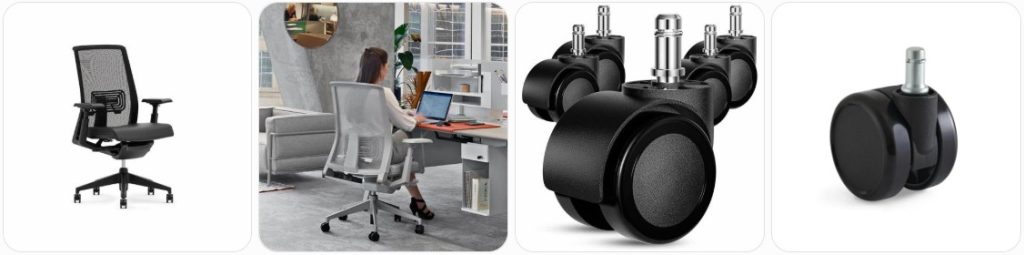
Replace noisy, stuck, missing, or floor-damaging casters. Check whether your Very chair uses standard stem casters and choose carpet or hard-floor wheels based on your room. » find on amazon / find on ebay
A bad cylinder can make the chair sink, wobble, or stop holding height. Measure the old cylinder and confirm seat height range before ordering a replacement. » find on amazon / find on ebay
Replace the base if a leg is cracked, the caster sockets are damaged, or the chair feels unstable. Match the cylinder opening and finish before buying. » find on amazon / find on ebay
Look for this part if the cushion is flattened, stained, torn, or the seat-depth slider no longer works properly. Fabric color and mounting pattern matter a lot. » find on amazon / find on ebay
Replace the back if the mesh is torn, frame tabs are cracked, or the backrest no longer attaches securely. Verify task chair, conference chair, stool, or side chair version. » find on amazon / find on ebay
Very chairs may have built-in or adjustable lumbar support depending on configuration. If the lumbar pad slips, cracks, or will not stay positioned, search by exact chair model. » find on amazon / find on ebay
This is the under-seat control unit for height, recline, back stop, tilt tension, and seat-depth features. Order carefully because different Very configurations may use different controls. » find on amazon / find on ebay
If the recline tension knob, back lock lever, or height paddle is missing or broken, look for the matching control handle instead of replacing the full mechanism first. » find on amazon / find on ebay
Use this search when the seat will not slide, locks unevenly, or feels loose on the track. Check underneath for cracked rails before ordering small replacement pieces. » find on amazon / find on ebay
Missing arm screws, back bolts, and seat fasteners can cause wobble or noise. Match thread size, length, head type, and washer style before replacing hardware. » find on amazon / find on ebay
Some Very side, conference, and stool versions may use glides instead of rolling casters. Replace worn glides when the chair scrapes floors or sits unevenly. » find on amazon / find on ebay
For Haworth Very stool models, the foot ring may loosen, scratch, or fail to hold position. Confirm stool height, ring diameter, and mounting style before buying. » find on amazon / find on ebay
Buy Haworth Very Parts From a Local Authorized Dealer or Repairman Near You
If you need an exact Haworth Very back frame, arm assembly, seat pan, lumbar part, or tilt control, the safest route is usually a Haworth authorized dealer. Start with the official Haworth dealer locator and ask for parts by chair name, photos, serial label, and configuration. You can also use Haworth’s How to Buy page if you need help finding the right purchasing channel. A local office chair repair shop may also help remove a stuck cylinder, install casters, or diagnose a broken control.
Tips for Ordering Haworth Very Replacement Parts
- Confirm whether your chair is a Very task chair, conference chair, side chair, or stool: Haworth Very is a product family, so a part from one version may not fit another version.
- Check the label under the seat: Look for model numbers, manufacturing details, order codes, or configuration labels before contacting a dealer or searching online.
- Take photos from multiple angles: Photograph the full chair, underside mechanism, arm mounts, caster stems, back connection points, and any broken area.
- Do not assume Haworth Fern, Zody, Soji, or Very parts interchange: Some parts may look similar online, but mounting points and controls can be different.
- Match arm style before buying arm pads: Very chairs may have different arm options, so check the pad shape, screw location, and adjustment style.
- Measure caster stems before ordering wheels: Caster replacements are easier than most repairs, but the wrong stem diameter or length can make the chair unstable.
- Be careful with gas cylinders: Measure the old cylinder and check the chair’s height range. A cylinder that is too tall or too short can make the chair uncomfortable.
- Ask the seller if the part came from a Haworth Very: Used parts listings sometimes use broad keywords. Ask for confirmation and photos before ordering.
- For mesh back or seat replacements, match color and fabric: If appearance matters, confirm mesh color, seat fabric, frame color, and finish before checkout.
- Keep the original screws and washers: Even if the broken part is being replaced, the original hardware can help you match thread size and mounting style.
Tools Needed to Repair Haworth Very
- Metric Allen Wrench Set: Useful for removing many under-seat, arm, and backrest fasteners on office chairs. Choose a set with several sizes so you can test fit without stripping bolts.
- Phillips Screwdriver Set: Helpful for smaller covers, plastic trim, and some arm pad screws depending on the exact Very part you are replacing.
- Rubber Mallet: Helps loosen a stuck gas cylinder or chair base without damaging the finish as easily as a metal hammer.
- Pipe Wrench: Often used to twist and remove a stuck gas lift cylinder from the mechanism. Protect surrounding parts and avoid crushing plastic covers.
- Office Chair Cylinder Removal Tool: A cleaner option for removing stubborn gas cylinders, especially if you do not want to mark the old cylinder with a wrench.
- Needle-Nose Pliers: Good for pulling clips, holding small nuts, removing debris from caster sockets, or positioning small hardware under the seat.
- Blue Threadlocker: Can help keep replacement arm or back bolts from loosening again. Use removable threadlocker only, not permanent red threadlocker.
- Tape Measure: Use it to measure caster stems, cylinder height, seat width, arm pad length, screw spacing, and foot ring diameter before ordering.
- Work Gloves: Helpful when handling metal chair bases, sharp broken plastic, or stuck cylinder parts.
- Plastic Trim Removal Tools: Useful when gently lifting plastic covers or trim without scratching the Haworth Very frame.
Haworth Very Diagram & Manual
For official Haworth Very diagrams, installation instructions, user guides, and service-style documents, start with Haworth’s official document and instruction resources. The Haworth instructions search for “Very” is the best place to look for installation sheets, back assembly documents, recycling/disassembly files, and related Very documents. You can also check the official Haworth Very user guide for adjustment information. If you are replacing a structural part, send the manual page and photos to a Haworth dealer so they can identify the exact part number.
How to Prevent Damage to Haworth Very Parts
- Do not force the tilt or back lock controls: If the lever or knob feels stuck, inspect the mechanism instead of pushing harder and breaking the control.
- Keep the caster sockets clean: Hair, carpet fibers, and dirt can jam wheels and add stress to the base and caster stems.
- Use the right casters for your floor: Hard-floor casters are better for wood, tile, and vinyl, while carpet casters are usually better for carpeted spaces.
- Avoid sitting on the front edge all day: This puts extra stress on the seat pan and seat-depth slider instead of letting the full seat support your weight.
- Adjust the lumbar support gently: If your Very has adjustable lumbar, move both sides evenly and avoid pulling the support beyond its normal range.
- Do not drag the chair sideways: Lifting the chair slightly when moving it over thresholds helps protect casters, glides, and the 5-star base.
- Tighten loose arm bolts early: A small wobble can become a cracked arm mount if ignored for months.
- Clean mesh and fabric carefully: Vacuum dust first and avoid soaking the mesh back or seat fabric with harsh cleaners.
- Keep the chair within normal office use: Standing on the seat, leaning heavily on one arm, or using the chair as a step stool can crack parts quickly.
- Inspect used chairs before daily use: If you bought a used Haworth Very, check the cylinder, base, casters, arms, back frame, and seat slider before relying on it.
Haworth Very Parts FAQ
Where can I buy genuine Haworth Very replacement parts?
The best place to start is a Haworth authorized dealer, especially for model-specific parts like the back assembly, seat pan, arms, lumbar support, and tilt mechanism. Online marketplaces may have used parts, but you should verify fit before buying.
Are Haworth Very arm pads universal?
No. Haworth Very arm pads can vary depending on the arm style and chair configuration. Before ordering, compare the pad shape, screw spacing, underside mounting points, and arm adjustment type.
Can I replace Haworth Very casters myself?
Usually, yes. Most office chair casters pull out and push in, but you still need to match the stem size and wheel type. If a caster socket is cracked, the base may need replacement too.
Why does my Haworth Very chair keep sinking?
A chair that slowly sinks usually has a failing gas lift cylinder. Replace the cylinder only after confirming the height lever is not stuck and the under-seat mechanism is not pressing the cylinder button constantly.
Can I use a generic gas cylinder on a Haworth Very?
Sometimes a generic office chair cylinder may work, but you must match the size, taper fit, travel height, and overall seat height. For best fit, compare measurements with the original cylinder or ask a Haworth dealer.
Can I replace the Haworth Very mesh back?
Yes, but it is usually a model-specific repair. The back frame, mesh style, and mounting points must match your exact Very chair. This is a part you should identify through Haworth documents or a dealer.
My Haworth Very armrest is loose. Do I need a new arm?
Not always. First check the mounting screws under the seat and under the arm pad. If the screw holes, bracket, or adjustment mechanism are cracked, then the arm assembly may need replacement.
Why does my Haworth Very make clicking or creaking noises?
Clicking can come from loose arm bolts, worn casters, a dry mechanism, a loose back connection, or a failing seat slider. Tighten accessible hardware first, then inspect moving parts under the seat.
Can I replace only the Haworth Very seat cushion?
It depends on the chair version and how the seat is built. Some repairs may require replacing the full seat assembly instead of only the cushion. Match the seat pan, fabric, and mounting pattern before ordering.
Are Haworth Very parts the same as Haworth Zody or Fern parts?
No. Very, Zody, Fern, Soji, and other Haworth chairs are different models. Some small hardware may look similar, but major parts like backs, arms, seats, and mechanisms should not be treated as interchangeable.
How do I identify my exact Haworth Very chair model?
Look under the seat for a manufacturer label, product code, date, or order information. Also note whether it is a task chair, conference chair, side chair, or stool, then compare photos with Haworth documents.
Is it worth repairing a used Haworth Very chair?
Often, yes, especially if the frame, back, and mechanism are still solid. Simple repairs like casters, arm pads, hardware, and cylinders can be worthwhile. Major seat, back, or mechanism repairs should be priced first.
Summary
Haworth Very parts are easiest to buy when you know the exact chair version and broken component. Small parts like casters, arm pads, screws, and cylinders may be found online, but model-specific parts are usually safer through Haworth or an authorized dealer. Take photos, check the label, compare the manual, and avoid guessing on expensive parts.

Besitu 500Lbs Office Chair Replacement Parts, w/ 6'' x 10.2" Mounting Holes Chair Base Heavy Duty Plate Swivel Tilt Control Seat Mechanism for Executive and Gaming Chairs

HYEJDRV Heavy Duty 500LBs Office Chair Tilt Control Mechanism Replacement Parts, Office Chair Swivel Tilt Base W/6" x 10.2" Mounting Holes - Black
